


Tunic from Palermo; Blue and red velvet, gold embroidery, gold appliqués with cloisonné enamel and filligree, pearls; l. 141,5 cm, 343 cm wide at hem. Period: Middle Byzantine, circa: 2nd quarter of the 12th century. Kunsthistorisches Museum, Vienna. The Kunsthistorisches Museum was built in 1891 near the Imperial Palace to house the extensive collections of the imperial family. With its vast array of eminent works and the largest Bruegel collection in the world, it is considered one of the most eminent museums in the world. Opening hours June to August Daily, 10 a.m. – 6 p.m. Thu, 10 a.m. – 9 p.m. September to May Tue – Sun, 10 a.m. – 6 p.m. Thu, 10 a.m. – 9 p.m.


Calyx (Chalice), Period: Middle Byzantine, 900s-1000s. Blood jasper (heliotrope) with gilt-copper mounts. The Cleveland Art Museum Hours: Tuesdays, Thursdays, Saturdays, Sundays 10:00 a.m.–5:00 p.m. Wednesdays, Fridays 10:00 a.m.–9:00 p.m. Closed Mondays.

Square Segmentum with Two Birds, Period: Early Byzantine; circa: 400s – 500s; Made in: Egypt, Material: tapestry; linen and wool. Dimensions: Overall: 10 x 10 cm (3 7/8 x 3 7/8 in.). The Cleveland Art Museum Hours: Tuesdays, Thursdays, Saturdays, Sundays 10:00 a.m.–5:00 p.m. Wednesdays, Fridays 10:00 a.m.–9:00 p.m. Closed Mondays.
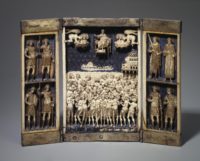
Triptych Showing the Forty Martyrs, Period: Middle Byzantine; circa: Late 11th – early 12th century. Materials: ivory and silver (frame). Technique: carved and painted. Dimensions: 18,5×24,2 cm. The collection of the State Hermitage includes over 3 million works of art and world culture artefacts. It contains paintings, graphic works, sculptures, works of applied art, archaeological artefacts and numismatic objects. The Hermitage is considered to have been founded in 1764, when Empress Catherine the Great acquired an impressive collection of works from the Berlin merchant Johann Ernst Gotzkowsky. The museum celebrates the anniversary of its founding each year on 7 December, St. Catherine’s Day. Opening Hours: Tuesday, Thursday, Saturday, Sunday: 10.30-18.00 Wednesday, Friday: 10.30-21.00 Closed: Monday.
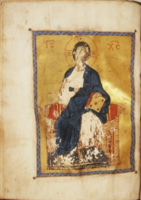
Gospels in Greek with Canon Tables and Prologues, Period: Middle Byzantine, 12th century A.D. The museum is open to the public Tuesday through Sunday, 11:30 a.m.–5:30 p.m., except for federal holidays.
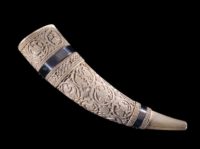
Oliphant; Material: ivory; with two silver bands. Period: Middle Byzantine / 10thC-11thC. Made in: Italy (southern)(Europe,Italy). British Museum is closed 24, 25 and 26 December and 1 January, but is open every other day of the year. Fast facts about the British Museum: Founded: 1753, Collection size: 8 million objects, Oldest object in the collection: Stone chopping tool (nearly 2 million years old).
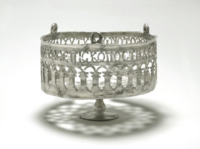
Openwork Lamp with Openwork Inscription, Period: Middle Byzantine, circa Mid. 6th Century A.D. The museum is open to the public Tuesday through Sunday, 11:30 a.m.–5:30 p.m., except for federal holidays.

Veil Embroidered with Gold Thread. Period: Late Byzantine; circa: end of the 13th or beginning of the 14th c. A liturgical article used for covering sacred vessels on an altar. It depicts Jesus in a portrayal of the Communion of the Apostles, symbolic of the sacrament of Holy Communion. One of the rare extant Byzantine embroideries. Made in: Constantinople. Dimensions: 0.52×0.65 m.
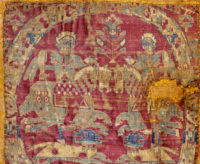
Textile Fragment, Materials: silk and cotton. Period: Middle Byzantine, circa: 8thc-9thc. Rectangular panel of woven silk sen onto a larger cotton cloth of irregular, roughly rectangular shape; two hunters on horseback, in a round frame with floral ornament. British Museum is closed 24, 25 and 26 December and 1 January, but is open every other day of the year.

Signet Ring of John, Imperial Spatharios, Period: Middle Byzantine, circa: 10th century, Materials: Gold, niello. On view at The Met Fifth Avenue in Gallery 300 . Museum Description: “The title spatharios, Sword-Bearer, was originally an honor reserved for the imperial bodyguard. By the middle Byzantine period, it had become an honorific title only, indicating Ioannis’s respectable status.” The Metropolitan Museum of Art (New York) is one of the world’s largest and finest art museums. Its collection includes more than two million works of art spanning five thousand years of world culture, from prehistory to the present and from every part of the globe. Public Hours: 10:30 a.m.–5:30 p.m. Open seven days a week.

Gospel Lectionary with Marginal Illuminations, Period: Middle Byzantine, 2nd half of 11th Century AD. The museum is open to the public Tuesday through Sunday, 11:30 a.m.–5:30 p.m., except for federal holidays.
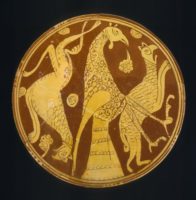
Dish of brown, fine-grained clay covered with a white slip. Period: Middle Byzantine; circa: Late 12th-early 13th c. The decoration is in champlevé, while the individual details are incised. A large standing bird is pictured between two bird-shaped animals resembling griffons but without wings. Dimensions: H. 0.07, Diam. of rim 0.235, Diam. of base 0.08 m. On the ground tufted plants. Yellow, very good quality glaze covers the inner surface and the edge of the rim on the outside. The Benaki Museum of Greek Culture is housed in one of the most beautiful neoclassical-style buildings in Athens, near the National Garden and the Hellenic Parliament.

Piece of woollen coptic textile, Period: Early Byzantine. circa: 6th century-8th century. Height: 90 millimetres (max) Width: 63 millimetres (max). British Museum is closed 24, 25 and 26 December and 1 January, but is open every other day of the year. Fast facts about the British Museum: Founded: 1753, Collection size: 8 million objects, Oldest object in the collection: Stone chopping tool (nearly 2 million years old).
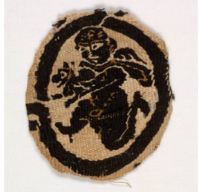
Fragment with Running Figure, Materials: tapestry; linen and wool, Period: Early Byzantine circa: 500s. The Cleveland Art Museum Hours: Tuesdays, Thursdays, Saturdays, Sundays 10:00 a.m.–5:00 p.m. Wednesdays, Fridays 10:00 a.m.–9:00 p.m. Closed Mondays.
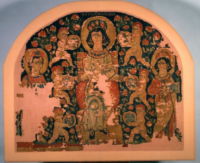
Hanging with Hestia Polyolbus, Period: Early Byzantine, First half of 6th Century. The museum is open to the public Tuesday through Sunday, 11:30 a.m.–5:30 p.m., except for federal holidays.

Tapestry fragment Egyptian (Coptic), Period: Early Byzantine, circa: 5th-6th century A.D. Material: silk. The MFA is open 7 days a week. Monday and Tuesday 10 am–5 pm, Wednesday–Friday 10 am–10 pm, Saturday and Sunday 10 am–5 pm.
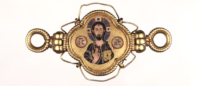
Hinged Closure with Christ and the Virgin, Period: Middle Byzantine. Date: Second half 10th to early 11th century. Materials: enamel on gold. The museum is open to the public Tuesday through Sunday, 11:30 a.m.–5:30 p.m., except for federal holidays.

Miliarensis of Basil II and Constantine VIII, Period: Middle Byzantine, circa: Between 989 and 1025, Material: silver, Technique: chased and gilded. The collection of the State Hermitage includes over 3 million works of art and world culture artefacts. It contains paintings, graphic works, sculptures, works of applied art, archaeological artefacts and numismatic objects. The Hermitage is considered to have been founded in 1764, when Empress Catherine the Great acquired an impressive collection of works from the Berlin merchant Johann Ernst Gotzkowsky. The museum celebrates the anniversary of its founding each year on 7 December, St. Catherine’s Day. Opening Hours: Tuesday, Thursday, Saturday, Sunday: 10.30-18.00 Wednesday, Friday: 10.30-21.00 Closed: Monday.
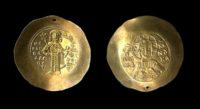
Gold coin; Ruler: Manuel I Comnenus, Byzantine emperor; Period: Middle Byzantine; circa: 1143-1180; Minted in Constantinople. British Museum is closed 24, 25 and 26 December and 1 January, but is open every other day of the year. Fast facts about the British Museum: Founded: 1753, Collection size: 8 million objects, Oldest object in the collection: Stone chopping tool (nearly 2 million years old).
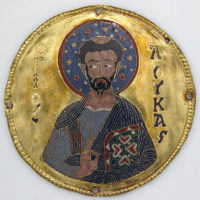
Medallion with Saint Luke from an Icon Frame, Period: Middle Byzantine, circa: ca. 1100, Made in Constantinople, Materials: Gold, silver, and enamel worked in cloisonné, Dimensions: Diam: 3 1/4 in. (8.3 cm) Mount: 20 1/2 x 15 x 7/8 in. (52.1 x 38.1 x 2.2 cm), On view at The Met Fifth Avenue in Gallery 303. The Metropolitan Museum of Art (New York) is one of the world’s largest and finest art museums. Its collection includes more than two million works of art spanning five thousand years of world culture, from prehistory to the present and from every part of the globe. Public Hours: 10:30 a.m.–5:30 p.m. Open seven days a week.

Cross of Romanos II and Basil II, Period: Middle Byzantine, Date: 960-963. Materials: silver and niello. Purchased by Mildred and Robert Woods Bliss from George Zacos (dealer) Istanbul, July 24th, 1953; Gift of Milderd and Robert Woods Bliss to Dumbarton Oaks Research Library and Collection, Washington, DC, 1953; The museum is open to the public Tuesday through Sunday, 11:30 a.m.–5:30 p.m., except for federal holidays.
No entries were found.