


Tunic from Palermo; Blue and red velvet, gold embroidery, gold appliqués with cloisonné enamel and filligree, pearls; l. 141,5 cm, 343 cm wide at hem. Period: Middle Byzantine, circa: 2nd quarter of the 12th century. Kunsthistorisches Museum, Vienna. The Kunsthistorisches Museum was built in 1891 near the Imperial Palace to house the extensive collections of the imperial family. With its vast array of eminent works and the largest Bruegel collection in the world, it is considered one of the most eminent museums in the world. Opening hours June to August Daily, 10 a.m. – 6 p.m. Thu, 10 a.m. – 9 p.m. September to May Tue – Sun, 10 a.m. – 6 p.m. Thu, 10 a.m. – 9 p.m.


This medallion of Christ is from a group of twelve that once surrounded an icon of the archangel Gabriel. Period: Middle Byzantine, circa: ca. 1100, Made in Constantinople, Materials: Gold, silver, and enamel worked in cloisonné. The Metropolitan Museum of Art (New York) is one of the world’s largest and finest art museums. Its collection includes more than two million works of art spanning five thousand years of world culture, from prehistory to the present and from every part of the globe. Public Hours: 10:30 a.m.–5:30 p.m. Open seven days a week.
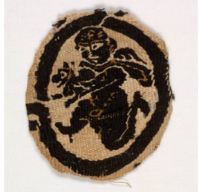
Fragment with Running Figure, Materials: tapestry; linen and wool, Period: Early Byzantine circa: 500s. The Cleveland Art Museum Hours: Tuesdays, Thursdays, Saturdays, Sundays 10:00 a.m.–5:00 p.m. Wednesdays, Fridays 10:00 a.m.–9:00 p.m. Closed Mondays.

Piece of woollen coptic textile, Period: Early Byzantine. circa: 6th century-8th century. Height: 90 millimetres (max) Width: 63 millimetres (max). British Museum is closed 24, 25 and 26 December and 1 January, but is open every other day of the year. Fast facts about the British Museum: Founded: 1753, Collection size: 8 million objects, Oldest object in the collection: Stone chopping tool (nearly 2 million years old).

Tapestry panel: Head of a man. Coptic, Egypt. Period: Early Byzantine circa: 4th-5th century A.D. Dimensions: 23.5 x 20 cm (9 1/4 x 7 7/8 in.); Legacy dimension: 23.5 x 20.0 cm. Materials: Wool. The MFA is open 7 days a week. Monday and Tuesday 10 am–5 pm, Wednesday–Friday 10 am–10 pm, Saturday and Sunday 10 am–5 pm.

Hyperpyron, Ruler: Alexius I, Period: Middle Byzantine; circa: Between 1092 and 1118. Material: gold. Technique: chased. The collection of the State Hermitage includes over 3 million works of art and world culture artefacts. It contains paintings, graphic works, sculptures, works of applied art, archaeological artefacts and numismatic objects. The Hermitage is considered to have been founded in 1764, when Empress Catherine the Great acquired an impressive collection of works from the Berlin merchant Johann Ernst Gotzkowsky. The museum celebrates the anniversary of its founding each year on 7 December, St. Catherine’s Day. Opening Hours: Tuesday, Thursday, Saturday, Sunday: 10.30-18.00 Wednesday, Friday: 10.30-21.00 Closed: Monday.

Slipper; leather; with pointed toe and thick sole with gilt borders on the upper part and the figure of an animal. Culture: Coptic. Period: Early Byzantine; circa: 4thC-6thC; Made in: Egypt. Length: 262 millimetres. British Museum is closed 24, 25 and 26 December and 1 January, but is open every other day of the year. Fast facts about the British Museum: Founded: 1753, Collection size: 8 million objects, Oldest object in the collection: Stone chopping tool (nearly 2 million years old).
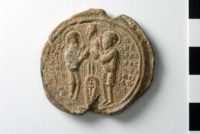
Seal, Theodore Kastamonites, Sebastos. The two Saints Theodore standing with their hands upraised towards the manus Dei above. Between them are their spears and a shield embossed with a patriarchal cross. This remarkable seal may well have belonged to Theodore Kastamonites, the maternal uncle of the emperor Isaac II Angelos (1185–1195, 1203–1204), who tended to the internal affairs of the empire during his nephew’s first reign. The museum is open to the public Tuesday through Sunday, 11:30 a.m.–5:30 p.m., except for federal holidays.
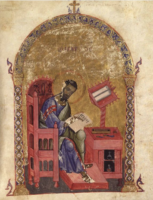
Evangelist Mark, Period: Middle Byzantine, ca. 1063. The museum is open to the public Tuesday through Sunday, 11:30 a.m.–5:30 p.m., except for federal holidays.

Loop earring; Materials: silver; Period: Middle Byzantine: 10thc-11thc. Length: 51 millimetres Weight: 12.2 grammes. British Museum is closed 24, 25 and 26 December and 1 January, but is open every other day of the year. Fast facts about the British Museum: Founded: 1753, Collection size: 8 million objects, Oldest object in the collection: Stone chopping tool (nearly 2 million years old).

Fragment of a Tunic, Period: Early Byzantine; circa: 5th – 7th century; Materials: tapestry weave; wool and linen. The Cleveland Art Museum Hours: Tuesdays, Thursdays, Saturdays, Sundays 10:00 a.m.–5:00 p.m. Wednesdays, Fridays 10:00 a.m.–9:00 p.m. Closed Mondays.
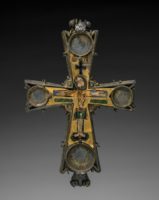
Pectoral Cross. Period: Middle Byzantine; circa: 900s. Made in: Constantinople. Materials: gold, gilt-silver, and cloisonné enamel. Overall: h. 12.4 cm (4 7/8 in.). The Cleveland Art Museum Hours: Tuesdays, Thursdays, Saturdays, Sundays 10:00 a.m.–5:00 p.m. Wednesdays, Fridays 10:00 a.m.–9:00 p.m. Closed Mondays.
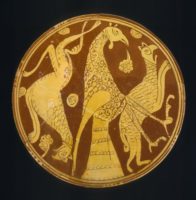
Dish of brown, fine-grained clay covered with a white slip. Period: Middle Byzantine; circa: Late 12th-early 13th c. The decoration is in champlevé, while the individual details are incised. A large standing bird is pictured between two bird-shaped animals resembling griffons but without wings. Dimensions: H. 0.07, Diam. of rim 0.235, Diam. of base 0.08 m. On the ground tufted plants. Yellow, very good quality glaze covers the inner surface and the edge of the rim on the outside. The Benaki Museum of Greek Culture is housed in one of the most beautiful neoclassical-style buildings in Athens, near the National Garden and the Hellenic Parliament.
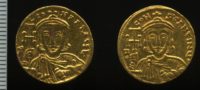
Gold coin; Ruler: Constantine V Copronymus; Leo III, Byzantine Emperor; Period: Middle Byzantine; circa: 737-741; Minted in: Constantinople. Weight: 4.4 grammes Diameter: 19 millimetres. British Museum is closed 24, 25 and 26 December and 1 January, but is open every other day of the year. Fast facts about the British Museum: Founded: 1753, Collection size: 8 million objects, Oldest object in the collection: Stone chopping tool (nearly 2 million years old).

Vollschmelz medallion (9th Century – Middle Byzantine Period). Gold cloisonné; bust of St. Nicholas, his right hand raised in benediction, a book in his left; inscription. British Museum is closed 24, 25 and 26 December and 1 January, but is open every other day of the year. Fast facts about the British Museum: Founded: 1753, Collection size: 8 million objects, Oldest object in the collection: Stone chopping tool (nearly 2 million years old).
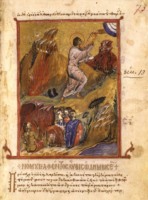
Psalter and New Testament, Period: Middle Byzantine, circa. 1084 A.D. The museum is open to the public Tuesday through Sunday, 11:30 a.m.–5:30 p.m., except for federal holidays.

Pendant Cross, support for a candelabrum or incense-holder. Period: Middle Byzantine, circa: 8th century A.D. Material: Bronze. Dimensions: Height (top part): 18.5 cm (7 5/16 in.); (height) bottom part: 24.5 cm (9 5/8 in.). The MFA is open 7 days a week. Monday and Tuesday 10 am–5 pm, Wednesday–Friday 10 am–10 pm, Saturday and Sunday 10 am–5 pm.
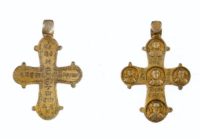
Pectoral cross with busts of Jesus Christ and saints, silver-gilt. On the reverse, the engraved inscription refers to its owner: Epiphanios. Period: Middle Byzantine; circa: 11th c. The Benaki Museum of Greek Culture is housed in one of the most beautiful neoclassical-style buildings in Athens, near the National Garden and the Hellenic Parliament.
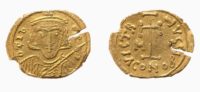
Gold coin. Ruler: Tiberius III, Byzantine Emperor; Period: Middle Byzantine; circa: 705-711; Minted in: Ravenna, Italy. British Museum is closed 24, 25 and 26 December and 1 January, but is open every other day of the year. Fast facts about the British Museum: Founded: 1753, Collection size: 8 million objects, Oldest object in the collection: Stone chopping tool (nearly 2 million years old).
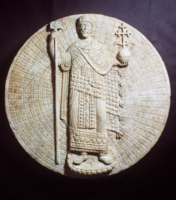
Roundel with Emperor John II Comnenus. Period: Byzantine, ca. 1110 – 1118. Material: marble. The museum is open to the public Tuesday through Sunday, 11:30 a.m.–5:30 p.m., except for federal holidays.

Veil Embroidered with Gold Thread. Period: Late Byzantine; circa: end of the 13th or beginning of the 14th c. A liturgical article used for covering sacred vessels on an altar. It depicts Jesus in a portrayal of the Communion of the Apostles, symbolic of the sacrament of Holy Communion. One of the rare extant Byzantine embroideries. Made in: Constantinople. Dimensions: 0.52×0.65 m.
No entries were found.