



Fragment of a Curtain, Period: Early Byzantine; circa: 5th century. Made in: Egypt, Materials: tabby weave, inwoven tapestry ornament; wool and linen. Dimensions: 23.2 x 22.9 cm (9 1/8 x 9 in.). The Cleveland Art Museum Hours: Tuesdays, Thursdays, Saturdays, Sundays 10:00 a.m.–5:00 p.m. Wednesdays, Fridays 10:00 a.m.–9:00 p.m. Closed Mondays.


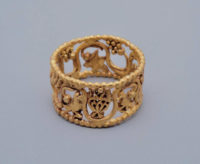
Ring in openwork filigree, Period: Early Byzantine circa (A.D. 550–650). Materials: Gold. The MFA is open 7 days a week. Monday and Tuesday 10 am–5 pm, Wednesday–Friday 10 am–10 pm, Saturday and Sunday 10 am–5 pm.

Tremissis of Theodoric in the name of Anastasius I, Period: Early Byzantine; circa: 491–518 A.D. Minted: Kingdom of the Ostrogoths, Ravenna. Materials: Gold. The Museum of Fine Arts, Boston is open 7 days a week. Monday and Tuesday 10 am–5 pm, Wednesday–Friday 10 am–10 pm, Saturday and Sunday 10 am–5 pm.

Medal of Emperor Constantine The Great, Period: Early Byzantine circa: 4th century, Materials: silver. On view at ” Raum-1 Medaillen”. The Museum is one of the oldest collections of its kind in Europe. Its beginnings date back to the second half of the 16th century.

Bird Figure, Period: Early Byzantine, circa: 6thC-7thC; Made in: Egypt. Dimensions: Height: 2.6 inches. British Museum is closed 24, 25 and 26 December and 1 January, but is open every other day of the year. Fast facts about the British Museum: Founded: 1753, Collection size: 8 million objects, Oldest object in the collection: Stone chopping tool (nearly 2 million years old).
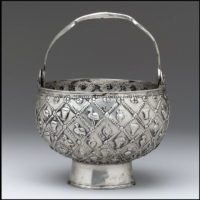
Silver Bucket, Period: Early Byzantine circa: 600s. Made in Tirana, Modern Albania. (Found in Vrap) Material: Silver. On view at The Met Fifth Avenue in Gallery 301. The Metropolitan Museum of Art (New York) is one of the world’s largest and finest art museums. Its collection includes more than two million works of art spanning five thousand years of world culture, from prehistory to the present and from every part of the globe. Public Hours: 10:30 a.m.–5:30 p.m. Open seven days a week.

Quantity of pearl, tourmaline, glass, coral and bronze beads, once attached no doubt to cloth. Period: Early Byzantine circa: 6-7th century. Made in/Findspot: Constantinople. In the Istanbul Archaeological Museum collections, there are rich and very important works of art belonging to various civilizations from the regions from Africa to Balkans , from Anatolia and Mesopotamia to Arab Peninsula and Afghanistan that were in the borders of the Ottoman Empire.
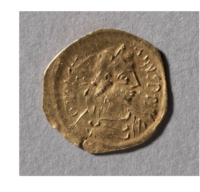
Half Tremissis of Justinian I, 527-565, Minted in: Constantinople. Material: Gold. Diameter: w. 1.5 cm (9/16 in.). Cleveland Art Museum Hours: Tuesdays, Thursdays, Saturdays, Sundays 10:00 a.m.–5:00 p.m. Wednesdays, Fridays 10:00 a.m.–9:00 p.m. Closed Mondays.
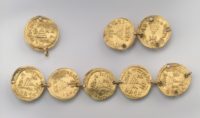
Fragment of a Necklace Consisting of Eight Coins, Period: Early Byzantine. circa: Between 637 and 646. Found: Pereshchepina Complex. near Poltava, the Village of Malaya Pereshchepina. Material: gold. The collection of the State Hermitage includes over 3 million works of art and world culture artefacts. It contains paintings, graphic works, sculptures, works of applied art, archaeological artefacts and numismatic objects. The Hermitage is considered to have been founded in 1764, when Empress Catherine the Great acquired an impressive collection of works from the Berlin merchant Johann Ernst Gotzkowsky. The museum celebrates the anniversary of its founding each year on 7 December, St. Catherine’s Day. Opening Hours: Tuesday, Thursday, Saturday, Sunday: 10.30-18.00 Wednesday, Friday: 10.30-21.00 Closed: Monday.

Fragment of a Large Hanging, Period: Early Byzantine; circa: 6th century, Made in: Egypt. Materials: tapestry weave (with plain tabby borders): wool and linen. The Cleveland Art Museum Hours: Tuesdays, Thursdays, Saturdays, Sundays 10:00 a.m.–5:00 p.m. Wednesdays, Fridays 10:00 a.m.–9:00 p.m. Closed Mondays.
[xyz-ihs snippet="Cleveland-Museum-Art-Booking-Deals-Finder"]
Gold Earrings, Period: Early Byzantine, circa: 6th century A.D. Made in: Constantinople, Materials: Gold. In the Istanbul Archaeological Museum collections, there are rich and very important works of art belonging to various civilizations from the regions from Africa to Balkans , from Anatolia and Mesopotamia to Arab Peninsula and Afghanistan that were in the borders of the Ottoman Empire.

Coptic Textile fragment, Period: Early Byzantine circa: 4th–6th century A.D. Object Place: Egypt. Materials: Linen plain weave with wool tapestry insert. Dimensions: 34.5 x 65 cm (13 9/16 x 25 9/16 in.).
The MFA is open 7 days a week. Monday and Tuesday 10 am–5 pm, Wednesday–Friday 10 am–10 pm, Saturday and Sunday 10 am–5 pm.

Leaf of the Consular Diptych of Areobindus, Period: Early Byzantine, Date: 506, School: Constantinople, Material: ivory, Technique: carved, Dimensions: 37,6; 14 cm. The collection of the State Hermitage includes over 3 million works of art and world culture artefacts. It contains paintings, graphic works, sculptures, works of applied art, archaeological artefacts and numismatic objects. The Hermitage is considered to have been founded in 1764, when Empress Catherine the Great acquired an impressive collection of works from the Berlin merchant Johann Ernst Gotzkowsky. The museum celebrates the anniversary of its founding each year on 7 December, St. Catherine’s Day. Opening Hours: Tuesday, Thursday, Saturday, Sunday: 10.30-18.00 Wednesday, Friday: 10.30-21.00 Closed: Monday.

Square Segmentum with Two Birds, Period: Early Byzantine; circa: 400s – 500s; Made in: Egypt, Material: tapestry; linen and wool. Dimensions: Overall: 10 x 10 cm (3 7/8 x 3 7/8 in.). The Cleveland Art Museum Hours: Tuesdays, Thursdays, Saturdays, Sundays 10:00 a.m.–5:00 p.m. Wednesdays, Fridays 10:00 a.m.–9:00 p.m. Closed Mondays.
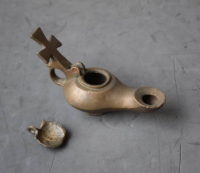
Lamp, Period: Early Byzantine, circa: 6th-7th c. Materials: Bronze. Found: Edfu, great church (Upper Egypt,Edfu) British Museum is closed 24, 25 and 26 December and 1 January, but is open every other day of the year. Fast facts about the British Museum: Founded: 1753, Collection size: 8 million objects, Oldest object in the collection: Stone chopping tool (nearly 2 million years old).
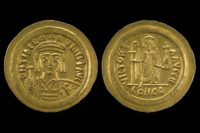
Gold Coin, Ruler: Maurice Tiberius; Period: Early Byzantine; circa: 582-602; Minted in: Ravenna. British Museum is closed 24, 25 and 26 December and 1 January, but is open every other day of the year. Fast facts about the British Museum: Founded: 1753, Collection size: 8 million objects, Oldest object in the collection: Stone chopping tool (nearly 2 million years old).
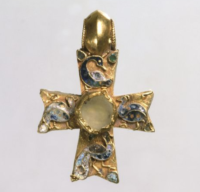
Pendant Cross with Birds and Zoe-Phos, Period: Early Byzantine, circa Late 6th Century. Materials: filigree enamel on gold. The museum is open to the public Tuesday through Sunday, 11:30 a.m.–5:30 p.m., except for federal holidays.
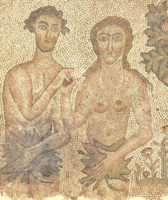
Fragment of a Floor Mosaic- Adam and Eve, Period: late 400s-early 500s, Early Byzantium, Northern Syria. The Cleveland Art Museum Hours: Tuesdays, Thursdays, Saturdays, Sundays 10:00 a.m.–5:00 p.m. Wednesdays, Fridays 10:00 a.m.–9:00 p.m. Closed Mondays.

Gold Finger Ring, Period: Early Byzantine (6 th. c.) flat hoop cut into eight alternating circular and hexagonal panels; circular panels engraved alternately with dove and palmette; hexagonal panels with S-shaped line crossed by bar, lines terminating with punched dots. Found/Acquired: Beirut. British Museum is closed 24, 25 and 26 December and 1 January, but is open every other day of the year. Fast facts about the British Museum: Founded: 1753, Collection size: 8 million objects, Oldest object in the collection: Stone chopping tool (nearly 2 million years old).

Plate with a Tigress Attacking an Ibex, Eastern Mediterranean, Material: Silver. Period: Early Byzantine circa: A.D. 450–525. The MFA is open 7 days a week. Monday and Tuesday 10 am–5 pm, Wednesday–Friday 10 am–10 pm, Saturday and Sunday 10 am–5 pm.

Ring, Materials: Gold. Period: Early Byzantine; circa: 6th-7th c. Ring with busts of saints on the shank and a representation of the Annunciation on the bezel with details picked out in niello. The Benaki Museum of Greek Culture is housed in one of the most beautiful neoclassical-style buildings in Athens, near the National Garden and the Hellenic Parliament.
No entries were found.