



Fragment of a Curtain, Period: Early Byzantine; circa: 5th century. Made in: Egypt, Materials: tabby weave, inwoven tapestry ornament; wool and linen. Dimensions: 23.2 x 22.9 cm (9 1/8 x 9 in.). The Cleveland Art Museum Hours: Tuesdays, Thursdays, Saturdays, Sundays 10:00 a.m.–5:00 p.m. Wednesdays, Fridays 10:00 a.m.–9:00 p.m. Closed Mondays.


Gold Earring, Period: Early Byzantine. circa: 6thC-7thC. Found/Acquired: Erythraea (Europe,Greece,Crete,Erythraea). Length: 3.6 inches. British Museum is closed 24, 25 and 26 December and 1 January, but is open every other day of the year. Fast facts about the British Museum: Founded: 1753, Collection size: 8 million objects, Oldest object in the collection: Stone chopping tool (nearly 2 million years old).

Veil Embroidered with Gold Thread. Period: Late Byzantine; circa: end of the 13th or beginning of the 14th c. A liturgical article used for covering sacred vessels on an altar. It depicts Jesus in a portrayal of the Communion of the Apostles, symbolic of the sacrament of Holy Communion. One of the rare extant Byzantine embroideries. Made in: Constantinople. Dimensions: 0.52×0.65 m.

Marriage Belt, Period: Early Byzantine, circa Late 6th-to-early 7th century A.D. Material: Gold. The museum is open to the public Tuesday through Sunday, 11:30 a.m.–5:30 p.m., except for federal holidays.

Earring with Emerald and Sapphire, Period: Early Byzantine circa: early 5th century. Size: 6.5 (2.6). Material: gold and gems. Found in 1910 during restoration work in Piazza della Consolazione, Rome. The museum is open to the public Tuesday through Sunday, 11:30 a.m.–5:30 p.m., except for federal holidays.
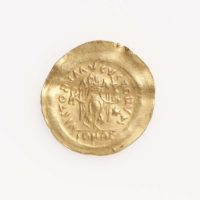
Tremissis of Justinian I, Period: Early Byzantine Period, circa: 552–565 A.D. , Minted in: Ravenna, Material: Gold. The Museum of Fine Arts, Boston is open 7 days a week. Monday and Tuesday 10 am–5 pm, Wednesday–Friday 10 am–10 pm, Saturday and Sunday 10 am–5 pm.
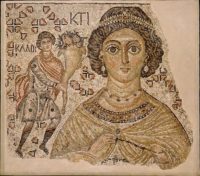
Fragment of a Floor Mosaic with a Personification of Ktisis, Period: Early Byzantine circa: 500–550, with modern restoration. Materials: Marble and glass. The Metropolitan Museum of Art (New York) is one of the world’s largest and finest art museums. Its collection includes more than two million works of art spanning five thousand years of world culture, from prehistory to the present and from every part of the globe. Public Hours: 10:30 a.m.–5:30 p.m. Open seven days a week.

Lamp for a Stand, Period: Early Byzantine. Material: Bronze. Found: Egypt. In the shape of a peacock, with circular foot; the spout is at the end of the tail, and the hole for filling in the back is covered by a hinged leaf-shaped lid.
British Museum is closed 24, 25 and 26 December and 1 January, but is open every other day of the year. Fast facts about the British Museum: Founded: 1753, Collection size: 8 million objects, Oldest object in the collection: Stone chopping tool (nearly 2 million years old).
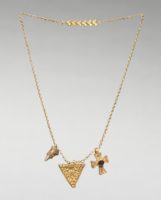
Chain with Two Pendants and a Cross, Period: Early Byzantine; circa: 6th century. Type of art work: Jewelry Materials: gold with granulation and a garnet. Overall: h. 45.7 cm (18 in.); Part 1: 2.6 x 2.6 cm (1 x 1 in.); Part 2: 2.8 x 1.9 cm (1 1/16 x 3/4 in.); Part 3: 1.9 x 1.1 cm (3/4 x 7/16 in.). The Cleveland Art Museum Hours: Tuesdays, Thursdays, Saturdays, Sundays 10:00 a.m.–5:00 p.m. Wednesdays, Fridays 10:00 a.m.–9:00 p.m. Closed Mondays.

Bracelet with Panthers, Period: Early Byzantine, Found in Hadra near Alexandria (Egypt). Material: gold. The museum is open to the public Tuesday through Sunday, 11:30 a.m.–5:30 p.m., except for federal holidays.

Hexagonal Censer with Christ, Peter and Paul, Period: Early Byzantine, circa Mid 6th Century A.D. It is embellished with richly symbolic images-repoussé portraits of Christ, Saint Peter, and Saint Paul, and supports of peacocks and dolphins. Solid cast, the supports are attached to the censer by rivets. The museum is open to the public Tuesday through Sunday, 11:30 a.m.–5:30 p.m., except for federal holidays.

Paten with Cross and Inscription, Period: Early Byzantine, circa: Mid 6th Century. Materials: silver, gilding and niello. The museum is open to the public Tuesday through Sunday, 11:30 a.m.–5:30 p.m., except for federal holidays.
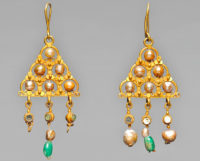
Earrings (pair), Period: Early Byzantine circa: 600s. Materials: gold. The Cleveland Art Museum Hours: Tuesdays, Thursdays, Saturdays, Sundays 10:00 a.m.–5:00 p.m. Wednesdays, Fridays 10:00 a.m.–9:00 p.m. Closed Mondays.
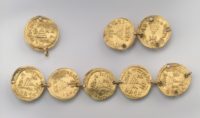
Fragment of a Necklace Consisting of Eight Coins, Period: Early Byzantine. circa: Between 637 and 646. Found: Pereshchepina Complex. near Poltava, the Village of Malaya Pereshchepina. Material: gold. The collection of the State Hermitage includes over 3 million works of art and world culture artefacts. It contains paintings, graphic works, sculptures, works of applied art, archaeological artefacts and numismatic objects. The Hermitage is considered to have been founded in 1764, when Empress Catherine the Great acquired an impressive collection of works from the Berlin merchant Johann Ernst Gotzkowsky. The museum celebrates the anniversary of its founding each year on 7 December, St. Catherine’s Day. Opening Hours: Tuesday, Thursday, Saturday, Sunday: 10.30-18.00 Wednesday, Friday: 10.30-21.00 Closed: Monday.

Tremissis of Emperor Maurice Tiberius, Period: ca. 582–602, Early Byzantine, Material: Gold. On view at The Met Fifth Avenue in Gallery 301. The Metropolitan Museum of Art (New York) is one of the world’s largest and finest art museums. Its collection includes more than two million works of art spanning five thousand years of world culture, from prehistory to the present and from every part of the globe. Public Hours: 10:30 a.m.–5:30 p.m. Open seven days a week.

Slipper; leather; with pointed toe and thick sole with gilt borders on the upper part and the figure of an animal. Culture: Coptic. Period: Early Byzantine; circa: 4thC-6thC; Made in: Egypt. Length: 262 millimetres. British Museum is closed 24, 25 and 26 December and 1 January, but is open every other day of the year. Fast facts about the British Museum: Founded: 1753, Collection size: 8 million objects, Oldest object in the collection: Stone chopping tool (nearly 2 million years old).

Plate with Cross and Greek Inscription ‘Hope of God’, Period: Early Byzantine, 7th century A.D. The museum is open to the public Tuesday through Sunday, 11:30 a.m.–5:30 p.m., except for federal holidays.

Cross, Period: Early Byzantine, circa: 6th c. Made in: Constantinople. Material: gold. Dimensions: 5х3 cm. The collection of the State Hermitage includes over 3 million works of art and world culture artefacts. It contains paintings, graphic works, sculptures, works of applied art, archaeological artefacts and numismatic objects. The Hermitage is considered to have been founded in 1764, when Empress Catherine the Great acquired an impressive collection of works from the Berlin merchant Johann Ernst Gotzkowsky. The museum celebrates the anniversary of its founding each year on 7 December, St. Catherine’s Day. Opening Hours: Tuesday, Thursday, Saturday, Sunday: 10.30-18.00 Wednesday, Friday: 10.30-21.00 Closed: Monday.

Plate with the Arming of David, Period: Early Byzantine, circa: 629–630, Material: Silver, Made in Constantinople. On view at The Met Fifth Avenue in Gallery 301. The Metropolitan Museum of Art (New York) is one of the world’s largest and finest art museums. Its collection includes more than two million works of art spanning five thousand years of world culture, from prehistory to the present and from every part of the globe. Public Hours: 10:30 a.m.–5:30 p.m. Open seven days a week.

Tapestry fragment Egyptian (Coptic), Period: Early Byzantine, circa: 5th-6th century A.D. Material: silk. The MFA is open 7 days a week. Monday and Tuesday 10 am–5 pm, Wednesday–Friday 10 am–10 pm, Saturday and Sunday 10 am–5 pm.

Plate with David Slaying a Lion, Period: Early Byzantine, circa: 629–630, Materials: Silver, Made in Constantinople, The Metropolitan Museum of Art (New York) is one of the world’s largest and finest art museums. Its collection includes more than two million works of art spanning five thousand years of world culture, from prehistory to the present and from every part of the globe. Public Hours: 10:30 a.m.–5:30 p.m. Open seven days a week.
No entries were found.