



Fragment of a Curtain, Period: Early Byzantine; circa: 5th century. Made in: Egypt, Materials: tabby weave, inwoven tapestry ornament; wool and linen. Dimensions: 23.2 x 22.9 cm (9 1/8 x 9 in.). The Cleveland Art Museum Hours: Tuesdays, Thursdays, Saturdays, Sundays 10:00 a.m.–5:00 p.m. Wednesdays, Fridays 10:00 a.m.–9:00 p.m. Closed Mondays.


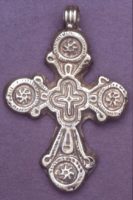
Pendant Cross, Period: Early Byzantine (7thc.) Height: 55.8 millimetres Width: 37.2 millimetres Depth: 7 millimetres Weight: 7.27 grammes. Materials: Gold. British Museum is closed 24, 25 and 26 December and 1 January, but is open every other day of the year. Fast facts about the British Museum: Founded: 1753, Collection size: 8 million objects, Oldest object in the collection: Stone chopping tool (nearly 2 million years old).

Ring in Openwork Filigree, Period: Early Byzantine Period, circa: A.D. 550–650. Material: Gold. The MFA is open 7 days a week. Monday and Tuesday 10 am–5 pm, Wednesday–Friday 10 am–10 pm, Saturday and Sunday 10 am–5 pm.

Copper Alloy Weight, Period: Early Byzantine, 6thc-7thc, discoidal with double-grooved convex profile; lathe-turned with rims; face engraved with double wreath enclosing cross above denominational mark, both inlaid with silver. British Museum is closed 24, 25 and 26 December and 1 January, but is open every other day of the year.
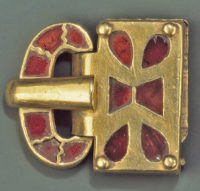
Buckle with Garnets. Period: Early Byzantine; circa:400–500 A.D. Material: gold. Made in: Constantinople. The Metropolitan Museum of Art (New York) is one of the world’s largest and finest art museums. Its collection includes more than two million works of art spanning five thousand years of world culture, from prehistory to the present and from every part of the globe. Public Hours: 10:30 a.m.–5:30 p.m. Open seven days a week.
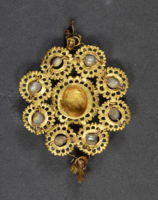
Pendant; Material: gold. Period: Late Roman; Early Byzantine; (5thc.) Found: Medinet el-Faiyum, Egypt. Open-work; composed of central setting with a stone (now missing), around which are eight small medallions, with a pearl in the middle of each. British Museum is closed 24, 25 and 26 December and 1 January, but is open every other day of the year.
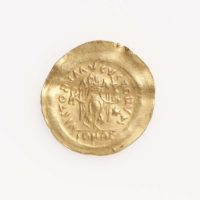
Tremissis of Justinian I, Period: Early Byzantine Period, circa: 552–565 A.D. , Minted in: Ravenna, Material: Gold. The Museum of Fine Arts, Boston is open 7 days a week. Monday and Tuesday 10 am–5 pm, Wednesday–Friday 10 am–10 pm, Saturday and Sunday 10 am–5 pm.
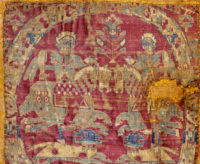
Textile Fragment, Materials: silk and cotton. Period: Middle Byzantine, circa: 8thc-9thc. Rectangular panel of woven silk sen onto a larger cotton cloth of irregular, roughly rectangular shape; two hunters on horseback, in a round frame with floral ornament. British Museum is closed 24, 25 and 26 December and 1 January, but is open every other day of the year.
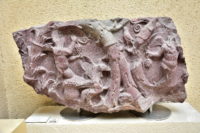
Sarcophagus Fragment of Emperor Constantine the Great (?) Materials: Porphyry Period: Early Byzantine circa: 4th century. In the Istanbul Archaeological Museum collections, there are rich and very important works of art belonging to various civilizations from the regions from Africa to Balkans , from Anatolia and Mesopotamia to Arab Peninsula and Afghanistan that were in the borders of the Ottoman Empire.

Gold Oval Pendant; embossed with a figure of the Virgin standing in the attitude of an orans within a pearled border. Findspot: Nile Delta, Alexandria, Egypt. Period: Early Byzantine. British Museum is closed 24, 25 and 26 December and 1 January, but is open every other day of the year. Fast facts about the British Museum: Founded: 1753, Collection size: 8 million objects, Oldest object in the collection: Stone chopping tool (nearly 2 million years old).
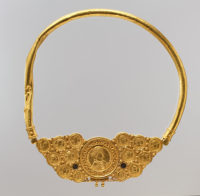
Pectoral with Coins and Pseudo-Medallion, Period: Early Byzantine, circa: 539–50, Materials: Gold, niello, On view at The Met Fifth Avenue in Gallery 302. The Metropolitan Museum of Art (New York) is one of the world’s largest and finest art museums. Its collection includes more than two million works of art spanning five thousand years of world culture, from prehistory to the present and from every part of the globe. Public Hours: 10:30 a.m.–5:30 p.m. Open seven days a week.
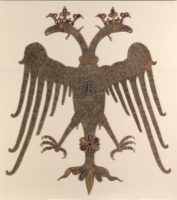
Altar Cloth or Podea. Period: Late Byzantine, circa: late 14th century. Made in: probably Greece or Constantinople. Materials: Silk, embroidery. Dimensions: 58 1/2 x 51 1/8 in. (148.6 x 129.9 cm).
Museum Description: “The double-headed eagle became the primary symbol of the state during the late Byzantine centuries and was also adopted for liturgical use. This huge eagle was probably used as an altar cloth or as a podea, a skirt hung beneath an icon. The inscription, which connects the owner with distinguished imperial dynasties, exaggerated the claims of a pretender to the patriarchal throne.”
On view at The Met Fifth Avenue in Gallery 303. The Metropolitan Museum of Art (New York) is one of the world’s largest and finest art museums. Its collection includes more than two million works of art spanning five thousand years of world culture, from prehistory to the present and from every part of the globe. Public Hours: 10:30 a.m.–5:30 p.m. Open seven days a week.

Spherical Small Container (pyxis) with Representations of Christ, Virgin and two Archangels. Period: Early Byzantine, circa: 6th–7th century A.D. Dimensions: Height x diameter: 7 x 9 cm (2 3/4 x 3 9/16 in.). Materials: Silver with gilding. This gilded silver pyxis of round kind was a container for antiques or scent made use of in Early Byzantine church ceremonies. The 4 figures created in repousse method reveal a bearded Christ offering a true blessing, the Virgin holding a symbol symbolic of her duties as Mother of God (Theotokos), as well as 2 angels worn lengthy sleeved chitons with segmenta on their shoulders and also hems. The cover is shed however could have had a dedicatory inscription.
The MFA is open 7 days a week. Monday and Tuesday 10 am–5 pm, Wednesday–Friday 10 am–10 pm, Saturday and Sunday 10 am–5 pm.
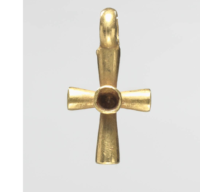
Pendant Cross, Material: Gold. Period: Early Byzantine, circa: 500s.
The Cleveland Art Museum Hours: Tuesdays, Thursdays, Saturdays, Sundays 10:00 a.m.–5:00 p.m. Wednesdays, Fridays 10:00 a.m.–9:00 p.m. Closed Mondays.
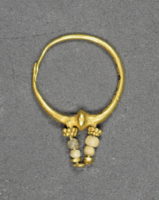
Earring; Period: Early Byzantine. circa: 5thC-7thC. Length: 27 millimetres. Materials: gold. British Museum is closed 24, 25 and 26 December and 1 January, but is open every other day of the year. Fast facts about the British Museum: Founded: 1753, Collection size: 8 million objects, Oldest object in the collection: Stone chopping tool (nearly 2 million years old).
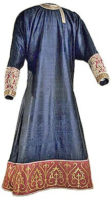
Tunic from Palermo; Blue and red velvet, gold embroidery, gold appliqués with cloisonné enamel and filligree, pearls; l. 141,5 cm, 343 cm wide at hem. Period: Middle Byzantine, circa: 2nd quarter of the 12th century. Kunsthistorisches Museum, Vienna. The Kunsthistorisches Museum was built in 1891 near the Imperial Palace to house the extensive collections of the imperial family. With its vast array of eminent works and the largest Bruegel collection in the world, it is considered one of the most eminent museums in the world. Opening hours June to August Daily, 10 a.m. – 6 p.m. Thu, 10 a.m. – 9 p.m. September to May Tue – Sun, 10 a.m. – 6 p.m. Thu, 10 a.m. – 9 p.m.
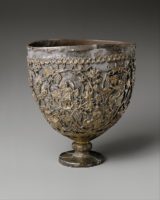
The Antioch Chalice, Period: Early Byzantine, circa: 500–550, Made in Antioch or Kaper Koraon, Materials: Silver, silver-gilt. On view at The Met Fifth Avenue in Gallery 300. The Metropolitan Museum of Art (New York) is one of the world’s largest and finest art museums. Its collection includes more than two million works of art spanning five thousand years of world culture, from prehistory to the present and from every part of the globe. Public Hours: 10:30 a.m.–5:30 p.m. Open seven days a week.

Lamp for a Stand, Period: Early Byzantine circa: 5thC-7thC. Found/Acquired: Damanhûr, Nile Delta. Materials: Bronze. British Museum is closed 24, 25 and 26 December and 1 January, but is open every other day of the year. Fast facts about the British Museum: Founded: 1753, Collection size: 8 million objects, Oldest object in the collection: Stone chopping tool (nearly 2 million years old).

Fragment of a Tunic, Period: Early Byzantine; circa: 5th – 7th century; Materials: tapestry weave; wool and linen. The Cleveland Art Museum Hours: Tuesdays, Thursdays, Saturdays, Sundays 10:00 a.m.–5:00 p.m. Wednesdays, Fridays 10:00 a.m.–9:00 p.m. Closed Mondays.

Bracelet with Jewelled Clasp, Period: Early Byzantine, Date: -circa-Second half 4th Century (possibly 360-80). Materials: gold and gems. The museum is open to the public Tuesday through Sunday, 11:30 a.m.–5:30 p.m., except for federal holidays.

Bird Figure, Period: Early Byzantine, circa: 6thC-7thC; Made in: Egypt. Dimensions: Height: 2.6 inches. British Museum is closed 24, 25 and 26 December and 1 January, but is open every other day of the year. Fast facts about the British Museum: Founded: 1753, Collection size: 8 million objects, Oldest object in the collection: Stone chopping tool (nearly 2 million years old).
No entries were found.