



Fragment of a Curtain, Period: Early Byzantine circa: 500s. Made in: Egypt, Materials: tabby weave, inwoven tapestry ornament; wool and linen, Overall: 38 x 52.3 cm (14 15/16 x 20 9/16 in.). The Cleveland Art Museum Hours: Tuesdays, Thursdays, Saturdays, Sundays 10:00 a.m.–5:00 p.m. Wednesdays, Fridays 10:00 a.m.–9:00 p.m. Closed Mondays.


Paten with Christogram and Repousse Border, Period: Early Byzantine, circa Mid 6th Century. Materials: silver, gilding and niello. The museum is open to the public Tuesday through Sunday, 11:30 a.m.–5:30 p.m., except for federal holidays.
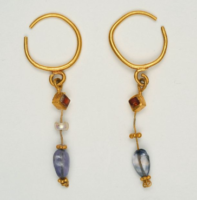
Pair of Earrings. Materials: Pearls, Sapphires, Gold, Gems and Gold Globules. Period: Early Byzantine, circa: Early 5th Century. The museum is open to the public Tuesday through Sunday, 11:30 a.m.–5:30 p.m., except for federal holidays.

Bracelet with Panthers, Period: Early Byzantine, Found in Hadra near Alexandria (Egypt). Material: gold. The museum is open to the public Tuesday through Sunday, 11:30 a.m.–5:30 p.m., except for federal holidays.

Bust of Emperor Arcadius, Period: Early Byzantine circa: late 4th. century. Made in/Findspot: Constantinople (Modern Turkey; Beyazit, Istanbul) Materials: Marble. In the Istanbul Archaeological Museum collections, there are rich and very important works of art belonging to various civilizations from the regions from Africa to Balkans, from Anatolia and Mesopotamia to Arab Peninsula and Afghanistan that were in the borders of the Ottoman Empire.
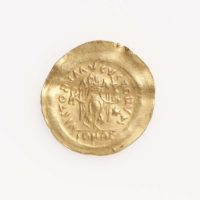
Tremissis of Justinian I, Period: Early Byzantine Period, circa: 552–565 A.D. , Minted in: Ravenna, Material: Gold. The Museum of Fine Arts, Boston is open 7 days a week. Monday and Tuesday 10 am–5 pm, Wednesday–Friday 10 am–10 pm, Saturday and Sunday 10 am–5 pm.
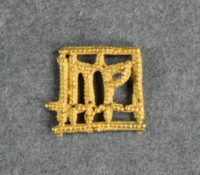
Personal gold ornament; Period: Early Byzantine Period; circa: 6thC-7thC. Length: 8 millimetres, Width: 7 millimetres. British Museum is closed 24, 25 and 26 December and 1 January, but is open every other day of the year. Fast facts about the British Museum: Founded: 1753, Collection size: 8 million objects, Oldest object in the collection: Stone chopping tool (nearly 2 million years old).

Fragment of a Large Hanging, Period: Early Byzantine; circa: 6th century, Made in: Egypt. Materials: tapestry weave (with plain tabby borders): wool and linen. The Cleveland Art Museum Hours: Tuesdays, Thursdays, Saturdays, Sundays 10:00 a.m.–5:00 p.m. Wednesdays, Fridays 10:00 a.m.–9:00 p.m. Closed Mondays.
[xyz-ihs snippet="Cleveland-Museum-Art-Booking-Deals-Finder"]
Pendant depicting the scene “Triumphal Entry” . Period: Early Byzantine; circa: 5-6th century. Material: glass. In the Istanbul Archaeological Museum collections, there are rich and very important works of art belonging to various civilizations from the regions from Africa to Balkans , from Anatolia and Mesopotamia to Arab Peninsula and Afghanistan that were in the borders of the Ottoman Empire.
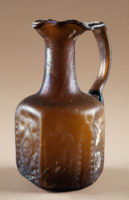
Hexagonal jug with Christian symbols, Material: Glass, mold-blown. Place of Manufacture: Jerusalem. Period: Early Byzantine circa: Late 6th–early 7th century A.D. Dimensions: Height: 13.2 cm (5 3/16 in.).The MFA is open 7 days a week. Monday and Tuesday 10 am–5 pm, Wednesday–Friday 10 am–10 pm, Saturday and Sunday 10 am–5 pm.

Double Costmetic Tube (balsamarium). Period: Early Byzantine, circa: 5th–6th century A.D. Dimensions: Height: 11.6 cm (4 9/16 in.) Material: Glass. The MFA is open 7 days a week. Monday and Tuesday 10 am–5 pm, Wednesday–Friday 10 am–10 pm, Saturday and Sunday 10 am–5 pm.

Polycandelon in the form of a pierced disk with openwork cross and nine circular perforations; Period: Early Byzantine, circa: 6thc.-7thc. Materials: copper alloy. Dimensions: Diameter: 279 millimetresHeight: 757 millimetres (suspended)Weight: 1.626 kilograms. British Museum is closed 24, 25 and 26 December and 1 January, but is open every other day of the year. Fast facts about the British Museum: Founded: 1753, Collection size: 8 million objects, Oldest object in the collection: Stone chopping tool (nearly 2 million years old).

Gold Earring; Period: Early Byzantine; consisting of a tower-like ornament attached to a gold chain; circa: 5thC-6thC, Early Byzantine. Found: Kalymnos, Greece. British Museum is closed 24, 25 and 26 December and 1 January, but is open every other day of the year. Fast facts about the British Museum: Founded: 1753, Collection size: 8 million objects, Oldest object in the collection: Stone chopping tool (nearly 2 million years old).

Quantity of pearl, tourmaline, glass, coral and bronze beads, once attached no doubt to cloth. Period: Early Byzantine circa: 6-7th century. Made in/Findspot: Constantinople. In the Istanbul Archaeological Museum collections, there are rich and very important works of art belonging to various civilizations from the regions from Africa to Balkans , from Anatolia and Mesopotamia to Arab Peninsula and Afghanistan that were in the borders of the Ottoman Empire.

Gold Bracelet, Period: Early Byzantine 600 (circa). Found: Syria (?). Width: 69.5 millimetres Height: 43.5 millimetres (medallion) Depth: 64.5 millimetres Weight: 68.57 grammes. British Museum is closed 24, 25 and 26 December and 1 January, but is open every other day of the year. Fast facts about the British Museum: Founded: 1753, Collection size: 8 million objects, Oldest object in the collection: Stone chopping tool (nearly 2 million years old).

Gold Finger Ring, Period: Early Byzantine (6 th. c.) flat hoop cut into eight alternating circular and hexagonal panels; circular panels engraved alternately with dove and palmette; hexagonal panels with S-shaped line crossed by bar, lines terminating with punched dots. Found/Acquired: Beirut. British Museum is closed 24, 25 and 26 December and 1 January, but is open every other day of the year. Fast facts about the British Museum: Founded: 1753, Collection size: 8 million objects, Oldest object in the collection: Stone chopping tool (nearly 2 million years old).

Veil Embroidered with Gold Thread. Period: Late Byzantine; circa: end of the 13th or beginning of the 14th c. A liturgical article used for covering sacred vessels on an altar. It depicts Jesus in a portrayal of the Communion of the Apostles, symbolic of the sacrament of Holy Communion. One of the rare extant Byzantine embroideries. Made in: Constantinople. Dimensions: 0.52×0.65 m.

The Attarouthi Treasure, Period: Early Byzantine, circa: 500-650s. Made in Attarouthi, Syria. Materials: Silver, silver-gilt. On view at The Met Fifth Avenue in Gallery 300.
These well-wrought liturgical items– chalices, censers, a filter, and also a depiction of the dove of the Holy Spirit– were amongst the belongings of a Christian church in the wealthy seller city of Attarouthi in Syria, after that among the wealthiest lands of the Byzantine Empire. The chalices, censers, and also filter were made use of for the Divine Liturgy, or Eucharist, where Christians take consecrated wine and bread in ceremony of the Last Supper and also Christ’s death. According to their inscriptions, written in Greek with several spelling variants, many of the objects were offerings of local citizens to the major church of the town, which was dedicated to Saint Stephen, and to a smaller church dedicated to Saint John (probably Saint John the Forerunner [the Baptist]). In the very early 7th century Syria dropped initially to the Sasanian Persians and afterwards to the militaries of Islam. These works were most likely hidden in haste in a safety container at some minute when the Byzantine military was pulling away from strikes on the area.
The Metropolitan Museum of Art (New York) is one of the world’s largest and finest art museums. Its collection includes more than two million works of art spanning five thousand years of world culture, from prehistory to the present and from every part of the globe. Public Hours: 10:30 a.m.–5:30 p.m. Open seven days a week.
[xyz-ihs snippet="Met-Museum-Booking"]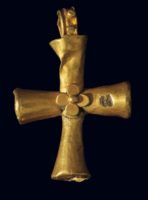
Cross, with a decorative quatrefoil rosette at the juncture of the arms. Materials: gold. Period: Early Byzantine; circa: Early 7th c. The Benaki Museum of Greek Culture is housed in one of the most beautiful neoclassical-style buildings in Athens, near the National Garden and the Hellenic Parliament.
[xyz-ihs snippet="Benaki-Hotels"]
Fragmentary Bracelet with Medallion of Emperor in a Chariot, Period: Early Byzantine, 6th century, Material: gold Found: Said to have been found at Latakia, Syria in 1948. The museum is open to the public Tuesday through Sunday, 11:30 a.m.–5:30 p.m., except for federal holidays.

Leaf-shaped pendant in opus interrasile embossed and chased with a foliate design. Period: Early Byzantine, circa: 7thc. Materials: gold. British Museum is closed 24, 25 and 26 December and 1 January, but is open every other day of the year. Fast facts about the British Museum: Founded: 1753, Collection size: 8 million objects, Oldest object in the collection: Stone chopping tool (nearly 2 million years old).
No entries were found.