



Fragment of a Curtain, Period: Early Byzantine circa: 500s. Made in: Egypt, Materials: tabby weave, inwoven tapestry ornament; wool and linen, Overall: 38 x 52.3 cm (14 15/16 x 20 9/16 in.). The Cleveland Art Museum Hours: Tuesdays, Thursdays, Saturdays, Sundays 10:00 a.m.–5:00 p.m. Wednesdays, Fridays 10:00 a.m.–9:00 p.m. Closed Mondays.


Lamp for a Stand, Period: Early Byzantine. Material: Bronze. Found: Egypt. In the shape of a peacock, with circular foot; the spout is at the end of the tail, and the hole for filling in the back is covered by a hinged leaf-shaped lid.
British Museum is closed 24, 25 and 26 December and 1 January, but is open every other day of the year. Fast facts about the British Museum: Founded: 1753, Collection size: 8 million objects, Oldest object in the collection: Stone chopping tool (nearly 2 million years old).
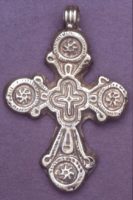
Pendant Cross, Period: Early Byzantine (7thc.) Height: 55.8 millimetres Width: 37.2 millimetres Depth: 7 millimetres Weight: 7.27 grammes. Materials: Gold. British Museum is closed 24, 25 and 26 December and 1 January, but is open every other day of the year. Fast facts about the British Museum: Founded: 1753, Collection size: 8 million objects, Oldest object in the collection: Stone chopping tool (nearly 2 million years old).
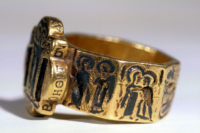
Octagonal Marriage Ring with Holy Site Scenes, Period: Early Byzantine, circa: 7th Century. Materials: gold with niello.The museum is open to the public Tuesday through Sunday, 11:30 a.m.–5:30 p.m., except for federal holidays.
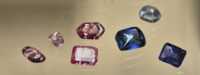
Sapphire and Tourmaline Ring Gems; Period: Early Byzantine, circa: 6-7th century. Findspot/Location: Constantinople. Materials: Sapphire, Tourmaline. In the Istanbul Archaeological Museum collections, there are rich and very important works of art belonging to various civilizations from the regions from Africa to Balkans , from Anatolia and Mesopotamia to Arab Peninsula and Afghanistan that were in the borders of the Ottoman Empire.

Spherical Small Container (pyxis) with Representations of Christ, Virgin and two Archangels. Period: Early Byzantine, circa: 6th–7th century A.D. Dimensions: Height x diameter: 7 x 9 cm (2 3/4 x 3 9/16 in.). Materials: Silver with gilding. This gilded silver pyxis of round kind was a container for antiques or scent made use of in Early Byzantine church ceremonies. The 4 figures created in repousse method reveal a bearded Christ offering a true blessing, the Virgin holding a symbol symbolic of her duties as Mother of God (Theotokos), as well as 2 angels worn lengthy sleeved chitons with segmenta on their shoulders and also hems. The cover is shed however could have had a dedicatory inscription.
The MFA is open 7 days a week. Monday and Tuesday 10 am–5 pm, Wednesday–Friday 10 am–10 pm, Saturday and Sunday 10 am–5 pm.
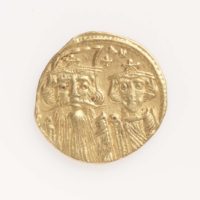
Solidus of Constans II, Period: Early Byzantine; circa: 661–663. Minted in: Constantinople, Material: Gold. The Museum of Fine Arts, Boston is open 7 days a week. Monday and Tuesday 10 am–5 pm, Wednesday–Friday 10 am–10 pm, Saturday and Sunday 10 am–5 pm.

Fragment of a Large Hanging, Period: Early Byzantine; circa: 6th century, Made in: Egypt. Materials: tapestry weave (with plain tabby borders): wool and linen. The Cleveland Art Museum Hours: Tuesdays, Thursdays, Saturdays, Sundays 10:00 a.m.–5:00 p.m. Wednesdays, Fridays 10:00 a.m.–9:00 p.m. Closed Mondays.
[xyz-ihs snippet="Cleveland-Museum-Art-Booking-Deals-Finder"]
Lion Statue from the monumental gate of Bucaleon Palace. Period: Early Byzantine, Findspot: Catladikapi, Istanbul, Material: Marble.
In the Istanbul Archaeological Museum collections, there are rich and very important works of art belonging to various civilizations from the regions from Africa to Balkans , from Anatolia and Mesopotamia to Arab Peninsula and Afghanistan that were in the borders of the Ottoman Empire.
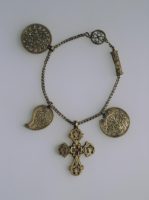
Necklace, Period: Early Byzantine, circa: 6th century. Made in Constantinople. Material: gold. Technique: carving, engraving. Dimensions: Lenght 27 cm. The collection of the State Hermitage includes over 3 million works of art and world culture artefacts. It contains paintings, graphic works, sculptures, works of applied art, archaeological artefacts and numismatic objects. The Hermitage is considered to have been founded in 1764, when Empress Catherine the Great acquired an impressive collection of works from the Berlin merchant Johann Ernst Gotzkowsky. The museum celebrates the anniversary of its founding each year on 7 December, St. Catherine’s Day. Opening Hours: Tuesday, Thursday, Saturday, Sunday: 10.30-18.00 Wednesday, Friday: 10.30-21.00 Closed: Monday.
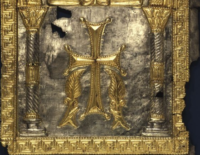
Book Cover with a Cross Flanked by Cypress Trees, Period: Early Byzantine, circa: Mid 6th Century. The museum is open to the public Tuesday through Sunday, 11:30 a.m.–5:30 p.m., except for federal holidays.
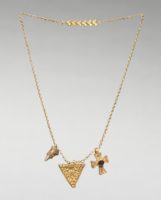
Chain with Two Pendants and a Cross, Period: Early Byzantine; circa: 6th century. Type of art work: Jewelry Materials: gold with granulation and a garnet. Overall: h. 45.7 cm (18 in.); Part 1: 2.6 x 2.6 cm (1 x 1 in.); Part 2: 2.8 x 1.9 cm (1 1/16 x 3/4 in.); Part 3: 1.9 x 1.1 cm (3/4 x 7/16 in.). The Cleveland Art Museum Hours: Tuesdays, Thursdays, Saturdays, Sundays 10:00 a.m.–5:00 p.m. Wednesdays, Fridays 10:00 a.m.–9:00 p.m. Closed Mondays.

Bronze Signet Ring, Period: Early Byzantine, high circular bezel rudely engraved in intaglio with standing figure. Findspot: Smyrna, Anatolia. (Modern: Izmir, Turkey) British Museum is closed 24, 25 and 26 December and 1 January, but is open every other day of the year. Fast facts about the British Museum: Founded: 1753, Collection size: 8 million objects, Oldest object in the collection: Stone chopping tool (nearly 2 million years old).
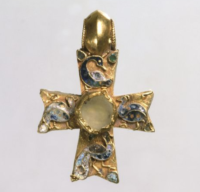
Pendant Cross with Birds and Zoe-Phos, Period: Early Byzantine, circa Late 6th Century. Materials: filigree enamel on gold. The museum is open to the public Tuesday through Sunday, 11:30 a.m.–5:30 p.m., except for federal holidays.
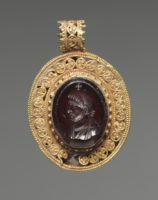
Pendant with Portrait Intaglio, Period: Early Byzantine, circa: 500s. Materials: Garnet with gold filigree setting. Size: 3.4 x 2.3 cm (1 5/16 x 7/8 in.). The Cleveland Art Museum Hours: Tuesdays, Thursdays, Saturdays, Sundays 10:00 a.m.–5:00 p.m. Wednesdays, Fridays 10:00 a.m.–9:00 p.m. Closed Mondays.
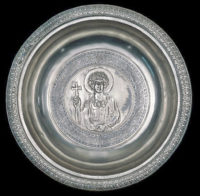
Bowl; circular medallion with half-figure of a nimbed saint, St Sergios. Period: Early Byzantine; circa: 641-651; Materials: Silver. Production place: Made in Tarsus, Anatolia (Modern Turkey). Found: Acheripoetos Monastery, Cyprus,Nicosia. British Museum is closed 24, 25 and 26 December and 1 January, but is open every other day of the year.
Fast facts about the British Museum: Founded: 1753, Collection size: 8 million objects, Oldest object in the collection: Stone chopping tool (nearly 2 million years old).

Medal of Emperor Constantine The Great, Period: Early Byzantine circa: 4th century, Materials: silver. On view at ” Raum-1 Medaillen”. The Museum is one of the oldest collections of its kind in Europe. Its beginnings date back to the second half of the 16th century.

Gold Oval Pendant; embossed with a figure of the Virgin standing in the attitude of an orans within a pearled border. Findspot: Nile Delta, Alexandria, Egypt. Period: Early Byzantine. British Museum is closed 24, 25 and 26 December and 1 January, but is open every other day of the year. Fast facts about the British Museum: Founded: 1753, Collection size: 8 million objects, Oldest object in the collection: Stone chopping tool (nearly 2 million years old).

Gold Earring; Period: Early Byzantine (6thc-7thc), one of a pair crescent-shaped loop. Found: Lambousa (Cyprus). British Museum is closed 24, 25 and 26 December and 1 January, but is open every other day of the year.
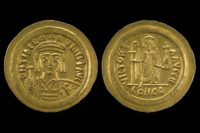
Gold Coin, Ruler: Maurice Tiberius; Period: Early Byzantine; circa: 582-602; Minted in: Ravenna. British Museum is closed 24, 25 and 26 December and 1 January, but is open every other day of the year. Fast facts about the British Museum: Founded: 1753, Collection size: 8 million objects, Oldest object in the collection: Stone chopping tool (nearly 2 million years old).

Circular Pendant with Double Solidus of Constantine I, Period: Early Byzantine, Materials: gold. The museum is open to the public Tuesday through Sunday, 11:30 a.m.–5:30 p.m., except for federal holidays.
No entries were found.