


Fragment of a Floor Mosaic- Adam and Eve, Period: late 400s-early 500s, Early Byzantium, Northern Syria. The Cleveland Art Museum Hours: Tuesdays, Thursdays, Saturdays, Sundays 10:00 a.m.–5:00 p.m. Wednesdays, Fridays 10:00 a.m.–9:00 p.m. Closed Mondays.

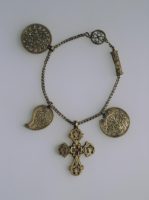
Necklace, Period: Early Byzantine, circa: 6th century. Made in Constantinople. Material: gold. Technique: carving, engraving. Dimensions: Lenght 27 cm. The collection of the State Hermitage includes over 3 million works of art and world culture artefacts. It contains paintings, graphic works, sculptures, works of applied art, archaeological artefacts and numismatic objects. The Hermitage is considered to have been founded in 1764, when Empress Catherine the Great acquired an impressive collection of works from the Berlin merchant Johann Ernst Gotzkowsky. The museum celebrates the anniversary of its founding each year on 7 December, St. Catherine’s Day. Opening Hours: Tuesday, Thursday, Saturday, Sunday: 10.30-18.00 Wednesday, Friday: 10.30-21.00 Closed: Monday.

Bracelet with Panthers, Period: Early Byzantine, Found in Hadra near Alexandria (Egypt). Material: gold. The museum is open to the public Tuesday through Sunday, 11:30 a.m.–5:30 p.m., except for federal holidays.
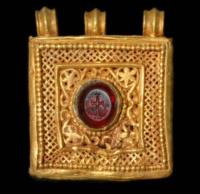
Reliquary of St. Zacharias, Period: Early Byzantine, 6th Century, Material: Gold and gems. The museum is open to the public Tuesday through Sunday, 11:30 a.m.–5:30 p.m., except for federal holidays.

Gold Earrings, Period: Early Byzantine, circa: 6th century A.D. Made in: Constantinople, Materials: Gold. In the Istanbul Archaeological Museum collections, there are rich and very important works of art belonging to various civilizations from the regions from Africa to Balkans , from Anatolia and Mesopotamia to Arab Peninsula and Afghanistan that were in the borders of the Ottoman Empire.
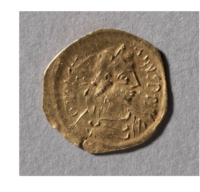
Half Tremissis of Justinian I, 527-565, Minted in: Constantinople. Material: Gold. Diameter: w. 1.5 cm (9/16 in.). Cleveland Art Museum Hours: Tuesdays, Thursdays, Saturdays, Sundays 10:00 a.m.–5:00 p.m. Wednesdays, Fridays 10:00 a.m.–9:00 p.m. Closed Mondays.
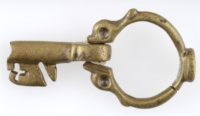
Key, Materials: Bronze. Made in: Constantinople. Period: Early Byzantine (?). The Benaki Museum of Greek Culture is housed in one of the most beautiful neoclassical-style buildings in Athens, near the National Garden and the Hellenic Parliament.

Horse and Lion Hanging, Period: Early Byzantine, 6th century A.D. Materials: wool and linen. The museum is open to the public Tuesday through Sunday, 11:30 a.m.–5:30 p.m., except for federal holidays.
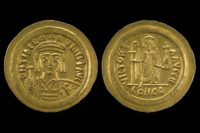
Gold Coin, Ruler: Maurice Tiberius; Period: Early Byzantine; circa: 582-602; Minted in: Ravenna. British Museum is closed 24, 25 and 26 December and 1 January, but is open every other day of the year. Fast facts about the British Museum: Founded: 1753, Collection size: 8 million objects, Oldest object in the collection: Stone chopping tool (nearly 2 million years old).
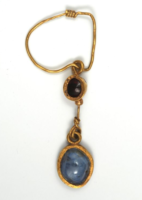
Earring, Materials: Ruby, Sapphire, Gold and Gems. Period: Early Byzantine, early 5th century. Found in 1910 during restoration work in Piazza della Consolazione, Rome. The museum is open to the public Tuesday through Sunday, 11:30 a.m.–5:30 p.m., except for federal holidays.

Gold Earring; Period: Early Byzantine (6thc-7thc), one of a pair crescent-shaped loop. Found: Lambousa (Cyprus). British Museum is closed 24, 25 and 26 December and 1 January, but is open every other day of the year.

Circular Pendant with Double Solidus of Constantine I, Period: Early Byzantine, Materials: gold. The museum is open to the public Tuesday through Sunday, 11:30 a.m.–5:30 p.m., except for federal holidays.

Lion Statue from the monumental gate of Bucaleon Palace. Period: Early Byzantine, Findspot: Catladikapi, Istanbul, Material: Marble.
In the Istanbul Archaeological Museum collections, there are rich and very important works of art belonging to various civilizations from the regions from Africa to Balkans , from Anatolia and Mesopotamia to Arab Peninsula and Afghanistan that were in the borders of the Ottoman Empire.
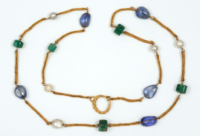
Necklace. Materials: Pearls, Sapphires, Gold, Gems and Plasma. Period: Early Byzantine, circa: early 5th century. The museum is open to the public Tuesday through Sunday, 11:30 a.m.–5:30 p.m., except for federal holidays.

Fragmentary Bracelet with Medallion of Emperor in a Chariot, Period: Early Byzantine, 6th century, Material: gold Found: Said to have been found at Latakia, Syria in 1948. The museum is open to the public Tuesday through Sunday, 11:30 a.m.–5:30 p.m., except for federal holidays.
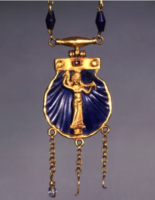
Necklace with Pendant of Aphrodite Anadyomene, Period: Early Byzantine, circa early 7th Century. The museum is open to the public Tuesday through Sunday, 11:30 a.m.–5:30 p.m., except for federal holidays.
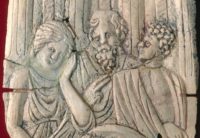
Relief based on story of Achilles receiving his armor on the island of Skyros. Period: Early Byzantine, Material: Ivory. The MFA is open 7 days a week. Monday and Tuesday 10 am–5 pm, Wednesday–Friday 10 am–10 pm, Saturday and Sunday 10 am–5 pm.

Fragment, Sleeve Ornament of a Tunic, Period: Early Byzantine, circa: 5th – 7th century. Made in: Egypt. Materials: tabby weave with inwoven tapestry ornament, linen and wool. Overall: 15.6 x 20 cm (6 1/8 x 7 13/16 in.). The Cleveland Art Museum Hours: Tuesdays, Thursdays, Saturdays, Sundays 10:00 a.m.–5:00 p.m. Wednesdays, Fridays 10:00 a.m.–9:00 p.m. Closed Mondays.

Plate with David Slaying a Lion, Period: Early Byzantine, circa: 629–630, Materials: Silver, Made in Constantinople, The Metropolitan Museum of Art (New York) is one of the world’s largest and finest art museums. Its collection includes more than two million works of art spanning five thousand years of world culture, from prehistory to the present and from every part of the globe. Public Hours: 10:30 a.m.–5:30 p.m. Open seven days a week.

Marriage Belt, Period: Early Byzantine, circa Late 6th-to-early 7th century A.D. Material: Gold. The museum is open to the public Tuesday through Sunday, 11:30 a.m.–5:30 p.m., except for federal holidays.

Tapestry fragment Egyptian (Coptic), Period: Early Byzantine, circa: 5th-6th century A.D. Material: silk. The MFA is open 7 days a week. Monday and Tuesday 10 am–5 pm, Wednesday–Friday 10 am–10 pm, Saturday and Sunday 10 am–5 pm.
No entries were found.