

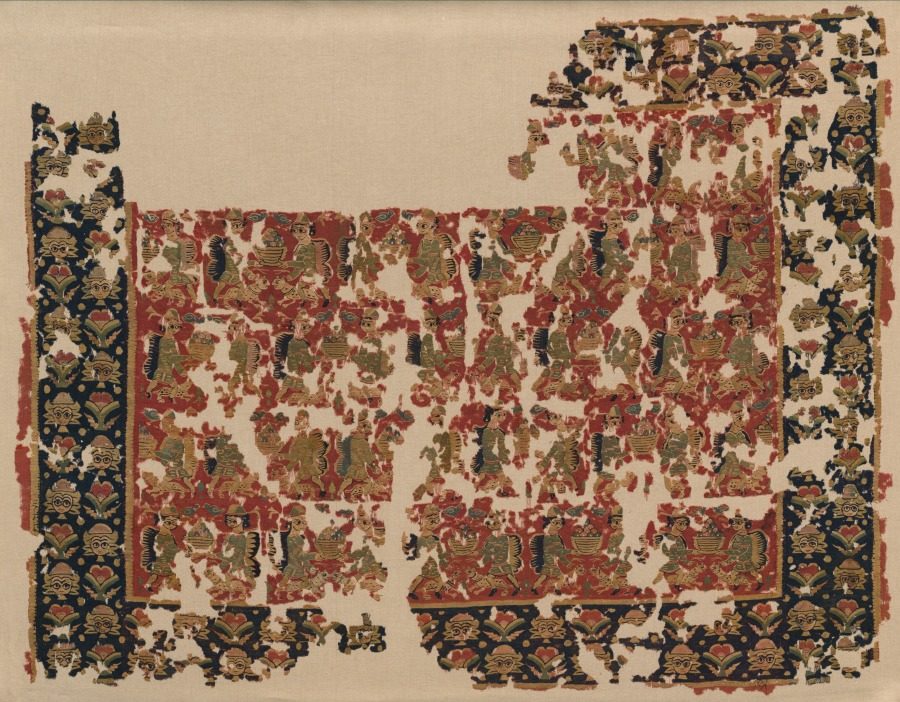
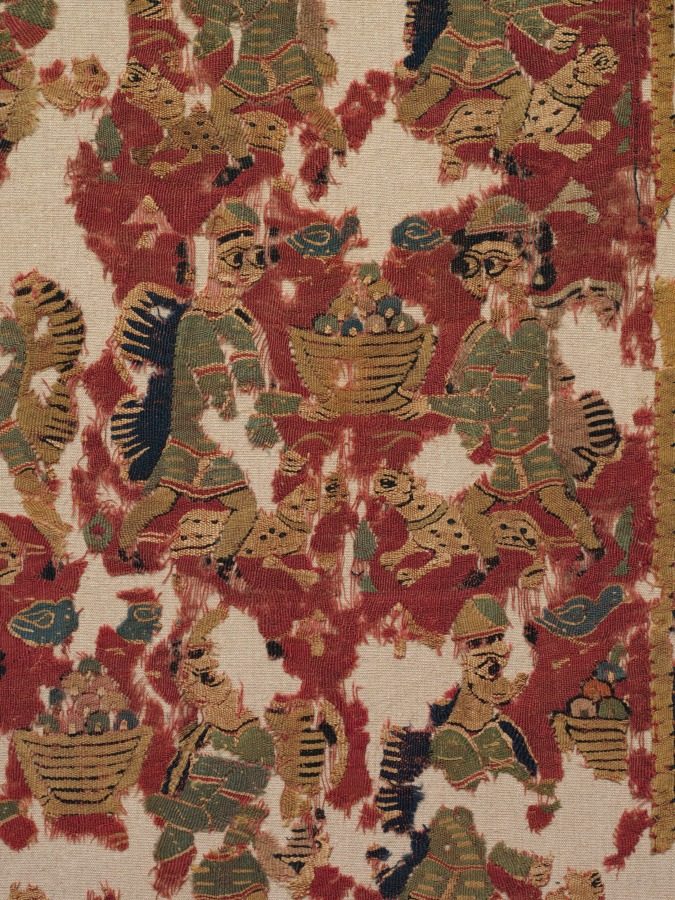

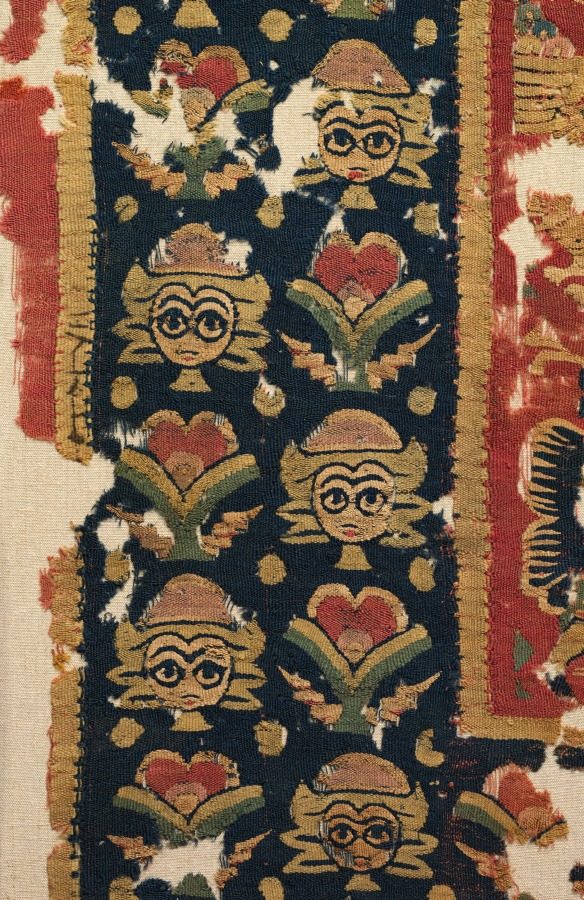
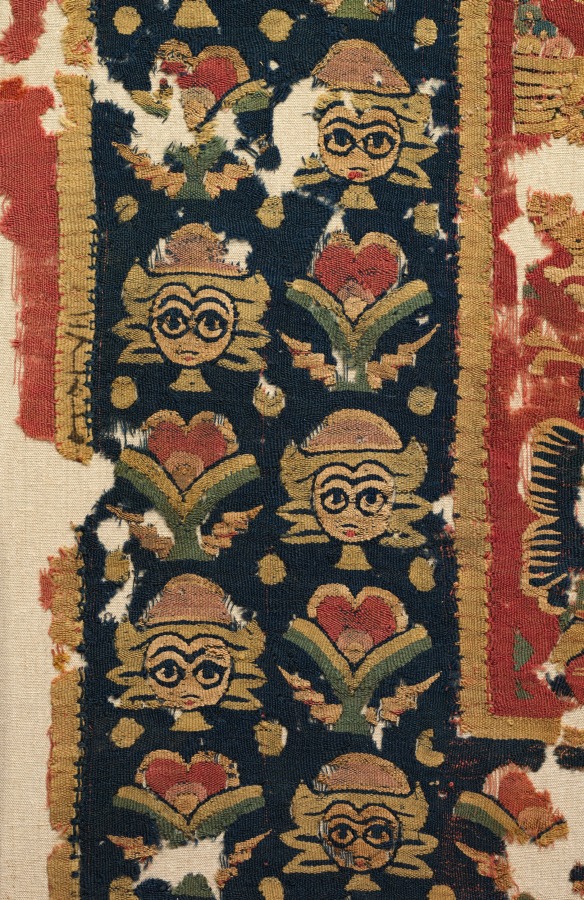
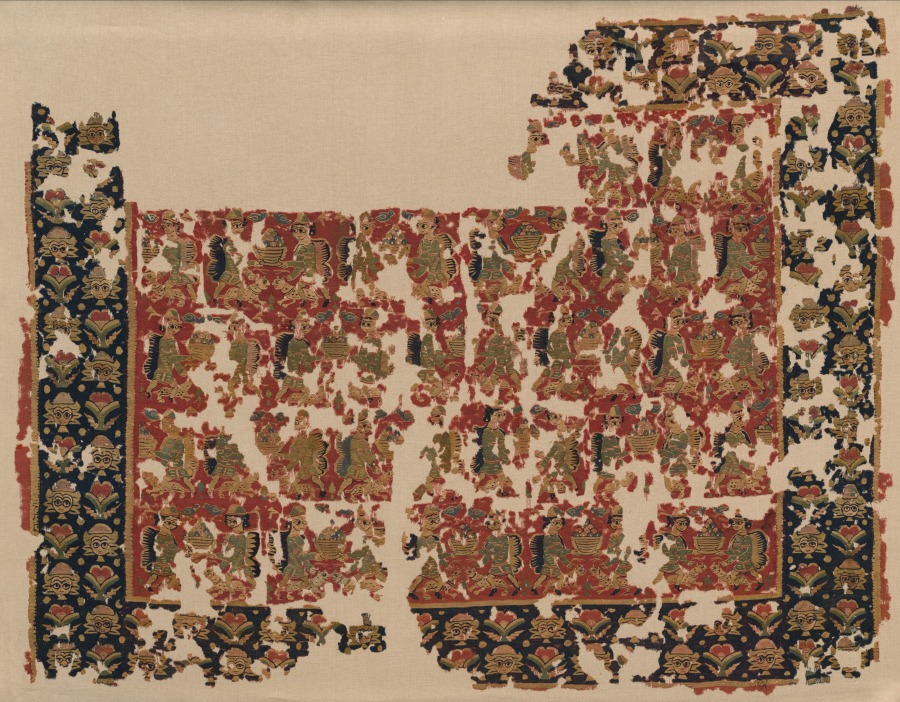
Fragment of a Large Hanging, Period: Early Byzantine; circa: 6th century, Made in: Egypt. Materials: tapestry weave (with plain tabby borders): wool and linen. The Cleveland Art Museum Hours: Tuesdays, Thursdays, Saturdays, Sundays 10:00 a.m.–5:00 p.m. Wednesdays, Fridays 10:00 a.m.–9:00 p.m. Closed Mondays.
Booking.com

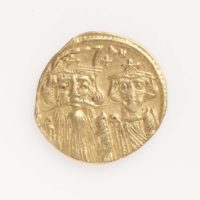
Solidus of Constans II, Period: Early Byzantine; circa: 661–663. Minted in: Constantinople, Material: Gold. The Museum of Fine Arts, Boston is open 7 days a week. Monday and Tuesday 10 am–5 pm, Wednesday–Friday 10 am–10 pm, Saturday and Sunday 10 am–5 pm.
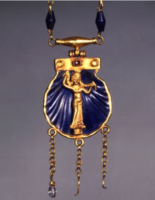
Necklace with Pendant of Aphrodite Anadyomene, Period: Early Byzantine, circa early 7th Century. The museum is open to the public Tuesday through Sunday, 11:30 a.m.–5:30 p.m., except for federal holidays.
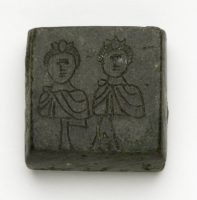
Copper alloy weight, Period: Early Byzantine, circa: 4thC-5thC. Quare with convex profile & chamfered lower edges; engraved on face with 2 imperial busts. British Museum is closed 24, 25 and 26 December and 1 January, but is open every other day of the year. Fast facts about the British Museum: Founded: 1753, Collection size: 8 million objects, Oldest object in the collection: Stone chopping tool (nearly 2 million years old).
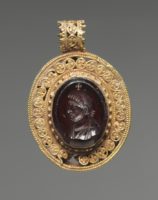
Pendant with Portrait Intaglio, Period: Early Byzantine, circa: 500s. Materials: Garnet with gold filigree setting. Size: 3.4 x 2.3 cm (1 5/16 x 7/8 in.). The Cleveland Art Museum Hours: Tuesdays, Thursdays, Saturdays, Sundays 10:00 a.m.–5:00 p.m. Wednesdays, Fridays 10:00 a.m.–9:00 p.m. Closed Mondays.
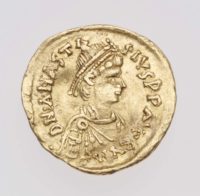
Tremissis of Anastasius I, Gold, Period: Early Byzantine, circa: A.D. 491–518. Mint: Constantinople. The MFA is open 7 days a week. Monday and Tuesday 10 am–5 pm, Wednesday–Friday 10 am–10 pm, Saturday and Sunday 10 am–5 pm.
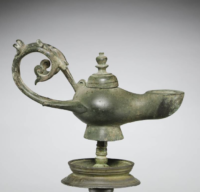
Lamp and Stand, Period: Early Byzantine, circa 400s. 34.8 x 13.5 cm (13 11/16 x 5 5/16 in.) Material: Bronze. The Cleveland Art Museum Hours: Tuesdays, Thursdays, Saturdays, Sundays 10:00 a.m.–5:00 p.m. Wednesdays, Fridays 10:00 a.m.–9:00 p.m. Closed Mondays.
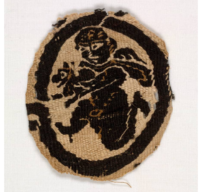
Fragment with Running Figure, Materials: tapestry; linen and wool, Period: Early Byzantine circa: 500s. The Cleveland Art Museum Hours: Tuesdays, Thursdays, Saturdays, Sundays 10:00 a.m.–5:00 p.m. Wednesdays, Fridays 10:00 a.m.–9:00 p.m. Closed Mondays.
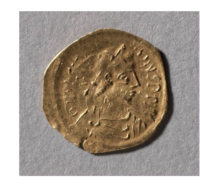
Half Tremissis of Justinian I, 527-565, Minted in: Constantinople. Material: Gold. Diameter: w. 1.5 cm (9/16 in.). Cleveland Art Museum Hours: Tuesdays, Thursdays, Saturdays, Sundays 10:00 a.m.–5:00 p.m. Wednesdays, Fridays 10:00 a.m.–9:00 p.m. Closed Mondays.
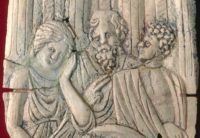
Relief based on story of Achilles receiving his armor on the island of Skyros. Period: Early Byzantine, Material: Ivory. The MFA is open 7 days a week. Monday and Tuesday 10 am–5 pm, Wednesday–Friday 10 am–10 pm, Saturday and Sunday 10 am–5 pm.
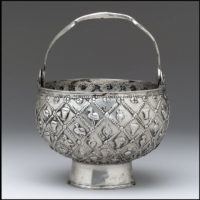
Silver Bucket, Period: Early Byzantine circa: 600s. Made in Tirana, Modern Albania. (Found in Vrap) Material: Silver. On view at The Met Fifth Avenue in Gallery 301. The Metropolitan Museum of Art (New York) is one of the world’s largest and finest art museums. Its collection includes more than two million works of art spanning five thousand years of world culture, from prehistory to the present and from every part of the globe. Public Hours: 10:30 a.m.–5:30 p.m. Open seven days a week.
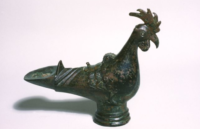
Rooster Lamp, Period: Early Byzantine, circa: 5th-6th century. Purchased from Fouad Alouf (dealer), Beirut, by Dumbarton Oaks Research Library and Collection, Washington, D.C., 1964. The museum is open to the public Tuesday through Sunday, 11:30 a.m.–5:30 p.m., except for federal holidays.
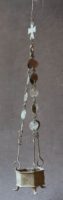
Censer; Period: Early Byzantine; circa: 6thc.-7thc.; Found: Syria. Materials: copper alloy. Dimensions: Diameter: 79 millimetresLength: 475 millimetres (suspension unit)Height: 61 millimetres. British Museum is closed 24, 25 and 26 December and 1 January, but is open every other day of the year. Fast facts about the British Museum: Founded: 1753, Collection size: 8 million objects, Oldest object in the collection: Stone chopping tool (nearly 2 million years old).
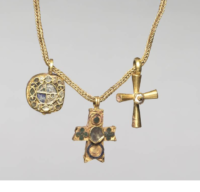
Chain with Pendant and Two Crosses, Materials: Gold with enamel and glass. Period: Early Byzantine, 500’s. The Cleveland Art Museum Hours: Tuesdays, Thursdays, Saturdays, Sundays 10:00 a.m.–5:00 p.m. Wednesdays, Fridays 10:00 a.m.–9:00 p.m. Closed Mondays.
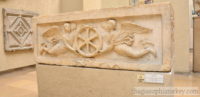
Sarcophagus – from the imperial cemetery beside the Church of the Holy Apostles. Period: Early Byzantine; circa: early 5th century. Material: Marble, Findspot: Sariguzel/Fatih – Istanbul.
In the Istanbul Archaeological Museum collections, there are rich and very important works of art belonging to various civilizations from the regions from Africa to Balkans , from Anatolia and Mesopotamia to Arab Peninsula and Afghanistan that were in the borders of the Ottoman Empire.
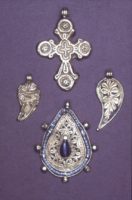
Pendant; material: gold; hollow box building; in the form of a bent leaf; obverse chased and convex marked, butt-soldered to a simple opposite; suspension loophole of triple-ribbed strip, the angle in between the loophole and the obverse masked by a brief length of the very same strip. Height: 32.2 millimetres Width: 15.5 millimetres. Period: Early Byzantine. British Museum is closed 24, 25 and 26 December and 1 January, but is open every other day of the year. Fast facts about the British Museum: Founded: 1753, Collection size: 8 million objects, Oldest object in the collection: Stone chopping tool (nearly 2 million years old).
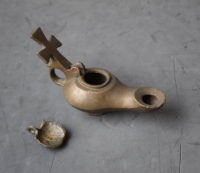
Lamp, Period: Early Byzantine, circa: 6th-7th c. Materials: Bronze. Found: Edfu, great church (Upper Egypt,Edfu) British Museum is closed 24, 25 and 26 December and 1 January, but is open every other day of the year. Fast facts about the British Museum: Founded: 1753, Collection size: 8 million objects, Oldest object in the collection: Stone chopping tool (nearly 2 million years old).
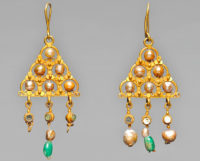
Earrings (pair), Period: Early Byzantine circa: 600s. Materials: gold. The Cleveland Art Museum Hours: Tuesdays, Thursdays, Saturdays, Sundays 10:00 a.m.–5:00 p.m. Wednesdays, Fridays 10:00 a.m.–9:00 p.m. Closed Mondays.
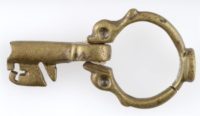
Key, Materials: Bronze. Made in: Constantinople. Period: Early Byzantine (?). The Benaki Museum of Greek Culture is housed in one of the most beautiful neoclassical-style buildings in Athens, near the National Garden and the Hellenic Parliament.
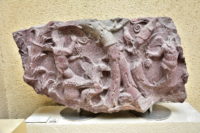
Sarcophagus Fragment of Emperor Constantine the Great (?) Materials: Porphyry Period: Early Byzantine circa: 4th century. In the Istanbul Archaeological Museum collections, there are rich and very important works of art belonging to various civilizations from the regions from Africa to Balkans , from Anatolia and Mesopotamia to Arab Peninsula and Afghanistan that were in the borders of the Ottoman Empire.
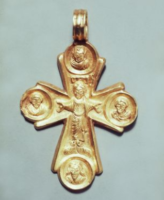
Enkolpion with Crucifixion, Busts of the Virgin, St. John and Two Saints. Period: Early Byzantine, circa: 6th-7th century. The museum is open to the public Tuesday through Sunday, 11:30 a.m.–5:30 p.m., except for federal holidays.
No entries were found.