


Ring with cross-shaped quatrefoil calyx bezel. Materials: gold. Period: Early Byzantine; circa: 6th-7th century. The Benaki Museum of Greek Culture is housed in one of the most beautiful neoclassical-style buildings in Athens, near the National Garden and the Hellenic Parliament.


Leaf of the Consular Diptych of Areobindus, Period: Early Byzantine, Date: 506, School: Constantinople, Material: ivory, Technique: carved, Dimensions: 37,6; 14 cm. The collection of the State Hermitage includes over 3 million works of art and world culture artefacts. It contains paintings, graphic works, sculptures, works of applied art, archaeological artefacts and numismatic objects. The Hermitage is considered to have been founded in 1764, when Empress Catherine the Great acquired an impressive collection of works from the Berlin merchant Johann Ernst Gotzkowsky. The museum celebrates the anniversary of its founding each year on 7 December, St. Catherine’s Day. Opening Hours: Tuesday, Thursday, Saturday, Sunday: 10.30-18.00 Wednesday, Friday: 10.30-21.00 Closed: Monday.
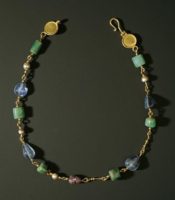
Gold necklace with sapphires, amethysts, emeralds and pearls. Period: Early Byzantine. Place/Findspot: Antinoë in Egypt. The Ravenna mosaics portray this kind of precious jewelry, widespread during Early Christian times, being worn by ladies of the imperial court of Theodora.
The Benaki Museum of Greek Culture is housed in one of the most beautiful neoclassical-style buildings in Athens, near the National Garden and the Hellenic Parliament. It was converted into a museum in order to shelter the collections of Antonis Benakis and was donated to the Greek nation by himself and his three sisters, Alexandra, Penelope and Argine. Following its most recent refurbishment (1989–2000), the building houses a unique exhibition on Greek culture arranged diachronically from prehistory to the 20th century.

Cross, Period: Middle Byzantine, circa: 1100, Made in Constantinople, Materials: Cloisonne enamel (red and blue). Dimensions: 15/16 x 7/8 x 1/8 in. (2.36 x 2.07 x 0.31 cm). On view at The Met Fifth Avenue in Gallery 303 . The Metropolitan Museum of Art (New York) is one of the world’s largest and finest art museums. Its collection includes more than two million works of art spanning five thousand years of world culture, from prehistory to the present and from every part of the globe. Public Hours: 10:30 a.m.–5:30 p.m. Open seven days a week.

Gold Earring; Period: Early Byzantine; consisting of a tower-like ornament attached to a gold chain; circa: 5thC-6thC, Early Byzantine. Found: Kalymnos, Greece. British Museum is closed 24, 25 and 26 December and 1 January, but is open every other day of the year. Fast facts about the British Museum: Founded: 1753, Collection size: 8 million objects, Oldest object in the collection: Stone chopping tool (nearly 2 million years old).

Spherical Small Container (pyxis) with Representations of Christ, Virgin and two Archangels. Period: Early Byzantine, circa: 6th–7th century A.D. Dimensions: Height x diameter: 7 x 9 cm (2 3/4 x 3 9/16 in.). Materials: Silver with gilding. This gilded silver pyxis of round kind was a container for antiques or scent made use of in Early Byzantine church ceremonies. The 4 figures created in repousse method reveal a bearded Christ offering a true blessing, the Virgin holding a symbol symbolic of her duties as Mother of God (Theotokos), as well as 2 angels worn lengthy sleeved chitons with segmenta on their shoulders and also hems. The cover is shed however could have had a dedicatory inscription.
The MFA is open 7 days a week. Monday and Tuesday 10 am–5 pm, Wednesday–Friday 10 am–10 pm, Saturday and Sunday 10 am–5 pm.
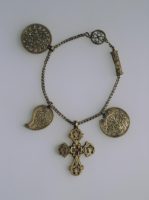
Necklace, Period: Early Byzantine, circa: 6th century. Made in Constantinople. Material: gold. Technique: carving, engraving. Dimensions: Lenght 27 cm. The collection of the State Hermitage includes over 3 million works of art and world culture artefacts. It contains paintings, graphic works, sculptures, works of applied art, archaeological artefacts and numismatic objects. The Hermitage is considered to have been founded in 1764, when Empress Catherine the Great acquired an impressive collection of works from the Berlin merchant Johann Ernst Gotzkowsky. The museum celebrates the anniversary of its founding each year on 7 December, St. Catherine’s Day. Opening Hours: Tuesday, Thursday, Saturday, Sunday: 10.30-18.00 Wednesday, Friday: 10.30-21.00 Closed: Monday.
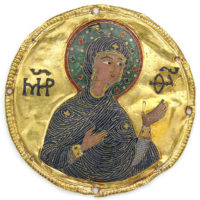
Medallion with the Virgin from an Icon Frame. Period: Middle Byzantine, circa: 1100, Made in Constantinople, Materials: Gold, silver, and enamel worked in cloisonné. The Metropolitan Museum of Art (New York) is one of the world’s largest and finest art museums. Its collection includes more than two million works of art spanning five thousand years of world culture, from prehistory to the present and from every part of the globe. Public Hours: 10:30 a.m.–5:30 p.m. Open seven days a week.
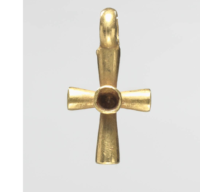
Pendant Cross, Material: Gold. Period: Early Byzantine, circa: 500s.
The Cleveland Art Museum Hours: Tuesdays, Thursdays, Saturdays, Sundays 10:00 a.m.–5:00 p.m. Wednesdays, Fridays 10:00 a.m.–9:00 p.m. Closed Mondays.

Gold Earring; Period: Early Byzantine (6thc-7thc), one of a pair crescent-shaped loop. Found: Lambousa (Cyprus). British Museum is closed 24, 25 and 26 December and 1 January, but is open every other day of the year.
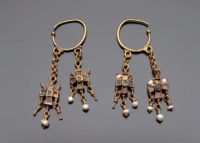
Earrings with Inlaid Cross-Shaped Pendants, Period: Early Byzantine Period, circa: 7th century A.D. Materials: Gold, glass paste and pearls. The MFA is open 7 days a week. Monday and Tuesday 10 am–5 pm, Wednesday–Friday 10 am–10 pm, Saturday and Sunday 10 am–5 pm.
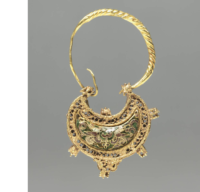
Crescent-Shaped Earring, Materials: Gold filigree with cloisonné enamel. Period: Middle Byzantine circa: 1000-1100. Dimensions: 2.3 x 2.6 cm (7/8 x 1 in.). The Cleveland Art Museum Hours: Tuesdays, Thursdays, Saturdays, Sundays 10:00 a.m.–5:00 p.m. Wednesdays, Fridays 10:00 a.m.–9:00 p.m. Closed Mondays.

Gold Solidus of Valentinian I (364–75), Made in Nicomedia (Modern Izmit, Turkey), Material: Gold. Valentinian restored Christian symbols, including the Chi-Rho emblem atop the emperor’s standard. On view at The Met Fifth Avenue in Gallery 301. The Metropolitan Museum of Art (New York) is one of the world’s largest and finest art museums. Its collection includes more than two million works of art spanning five thousand years of world culture, from prehistory to the present and from every part of the globe. Public Hours: 10:30 a.m.–5:30 p.m. Open seven days a week.

Bird Figure, Period: Early Byzantine, circa: 6thC-7thC; Made in: Egypt. Dimensions: Height: 2.6 inches. British Museum is closed 24, 25 and 26 December and 1 January, but is open every other day of the year. Fast facts about the British Museum: Founded: 1753, Collection size: 8 million objects, Oldest object in the collection: Stone chopping tool (nearly 2 million years old).
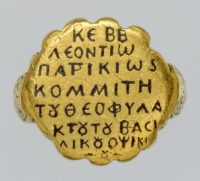
Ring of Leontios, Period: Middle Byzantine, circa: 1000, Materials: Gold, niello, Inscribed: “Lord help Leontius, Patrician and Count of imperial Obsikion guarded by God”. The ring came from Leontios of the district of Opsikion, in exactly what is currently northwestern Turkey. Patrikios as well as komes were Roman titles that moved in definition throughout the Byzantine period; it promises that Leontios was the guv of the district or an upper-level general. On view at The Met Fifth Avenue in Gallery 303 . The Metropolitan Museum of Art (New York) is one of the world’s largest and finest art museums. Its collection includes more than two million works of art spanning five thousand years of world culture, from prehistory to the present and from every part of the globe. Public Hours: 10:30 a.m.–5:30 p.m. Open seven days a week.

Chain with Pendant Cross, Materials: gold, glass, pearl, garnet, and sapphire. Period: Early Byzantine, circa 500s. The Cleveland Art Museum Hours: Tuesdays, Thursdays, Saturdays, Sundays 10:00 a.m.–5:00 p.m. Wednesdays, Fridays 10:00 a.m.–9:00 p.m. Closed Mondays.

Lamp for a Stand, Period: Early Byzantine circa: 5thC-7thC. Found/Acquired: Damanhûr, Nile Delta. Materials: Bronze. British Museum is closed 24, 25 and 26 December and 1 January, but is open every other day of the year. Fast facts about the British Museum: Founded: 1753, Collection size: 8 million objects, Oldest object in the collection: Stone chopping tool (nearly 2 million years old).

Fragment from a Curtain, Materials: tabby weave with inwoven tapestry ornament, linen and wool. Period: Early Byzantine circa: 5th – 6th century. The Cleveland Art Museum Hours: Tuesdays, Thursdays, Saturdays, Sundays 10:00 a.m.–5:00 p.m. Wednesdays, Fridays 10:00 a.m.–9:00 p.m. Closed Mondays.

Cross with Pearls, Period: Late Byzantine, circa: 1200–1400. Materials: Gold and pearls. On view at The Met Fifth Avenue in Gallery 303. The Metropolitan Museum of Art (New York) is one of the world’s largest and finest art museums. Its collection includes more than two million works of art spanning five thousand years of world culture, from prehistory to the present and from every part of the globe. Public Hours: 10:30 a.m.–5:30 p.m. Open seven days a week.

Plate with the Arming of David, Period: Early Byzantine, circa: 629–630, Material: Silver, Made in Constantinople. On view at The Met Fifth Avenue in Gallery 301. The Metropolitan Museum of Art (New York) is one of the world’s largest and finest art museums. Its collection includes more than two million works of art spanning five thousand years of world culture, from prehistory to the present and from every part of the globe. Public Hours: 10:30 a.m.–5:30 p.m. Open seven days a week.
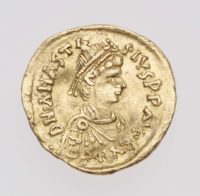
Tremissis of Anastasius I, Gold, Period: Early Byzantine, circa: A.D. 491–518. Mint: Constantinople. The MFA is open 7 days a week. Monday and Tuesday 10 am–5 pm, Wednesday–Friday 10 am–10 pm, Saturday and Sunday 10 am–5 pm.
No entries were found.