


Ring with cross-shaped quatrefoil calyx bezel. Materials: gold. Period: Early Byzantine; circa: 6th-7th century. The Benaki Museum of Greek Culture is housed in one of the most beautiful neoclassical-style buildings in Athens, near the National Garden and the Hellenic Parliament.


Gold coin. Ruler: Leontius II; Period: Early Byzantine; circa: 695-698; Minted in: Rome. British Museum is closed 24, 25 and 26 December and 1 January, but is open every other day of the year. Fast facts about the British Museum: Founded: 1753, Collection size: 8 million objects, Oldest object in the collection: Stone chopping tool (nearly 2 million years old).

Coptic Textile fragment, Period: Early Byzantine circa: 4th–6th century A.D. Object Place: Egypt. Materials: Linen plain weave with wool tapestry insert. Dimensions: 34.5 x 65 cm (13 9/16 x 25 9/16 in.).
The MFA is open 7 days a week. Monday and Tuesday 10 am–5 pm, Wednesday–Friday 10 am–10 pm, Saturday and Sunday 10 am–5 pm.
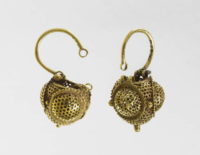
Earring, Period: Middle Byzantine circa: 11thc. Height: 1 inches. Material: gold. British Museum is closed 24, 25 and 26 December and 1 January, but is open every other day of the year. Fast facts about the British Museum: Founded: 1753, Collection size: 8 million objects, Oldest object in the collection: Stone chopping tool (nearly 2 million years old).
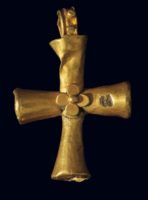
Cross, with a decorative quatrefoil rosette at the juncture of the arms. Materials: gold. Period: Early Byzantine; circa: Early 7th c. The Benaki Museum of Greek Culture is housed in one of the most beautiful neoclassical-style buildings in Athens, near the National Garden and the Hellenic Parliament.
[xyz-ihs snippet="Benaki-Hotels"]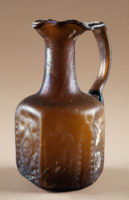
Hexagonal jug with Christian symbols, Material: Glass, mold-blown. Place of Manufacture: Jerusalem. Period: Early Byzantine circa: Late 6th–early 7th century A.D. Dimensions: Height: 13.2 cm (5 3/16 in.).The MFA is open 7 days a week. Monday and Tuesday 10 am–5 pm, Wednesday–Friday 10 am–10 pm, Saturday and Sunday 10 am–5 pm.
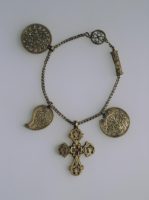
Necklace, Period: Early Byzantine, circa: 6th century. Made in Constantinople. Material: gold. Technique: carving, engraving. Dimensions: Lenght 27 cm. The collection of the State Hermitage includes over 3 million works of art and world culture artefacts. It contains paintings, graphic works, sculptures, works of applied art, archaeological artefacts and numismatic objects. The Hermitage is considered to have been founded in 1764, when Empress Catherine the Great acquired an impressive collection of works from the Berlin merchant Johann Ernst Gotzkowsky. The museum celebrates the anniversary of its founding each year on 7 December, St. Catherine’s Day. Opening Hours: Tuesday, Thursday, Saturday, Sunday: 10.30-18.00 Wednesday, Friday: 10.30-21.00 Closed: Monday.
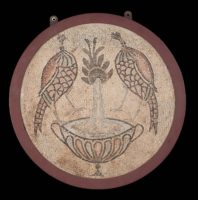
Mosaic, Two Peacocks Perch on a Fountain, Period: Early Byzantine, circa: A.D. 450–462. The MFA is open 7 days a week. Monday and Tuesday 10 am–5 pm, Wednesday–Friday 10 am–10 pm, Saturday and Sunday 10 am–5 pm.

Medallion with a Bust of St Symeon; Period: Middle Byzantine; circa: 10th-11th c. Materials: gold. Dimensions: 0,021 m.
The Benaki Museum of Greek Culture is housed in one of the most beautiful neoclassical-style buildings in Athens, near the National Garden and the Hellenic Parliament. It was converted into a museum in order to shelter the collections of Antonis Benakis and was donated to the Greek nation by himself and his three sisters, Alexandra, Penelope and Argine. Following its most recent refurbishment (1989–2000), the building houses a unique exhibition on Greek culture arranged diachronically from prehistory to the 20th century.
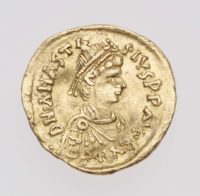
Tremissis of Anastasius I, Gold, Period: Early Byzantine, circa: A.D. 491–518. Mint: Constantinople. The MFA is open 7 days a week. Monday and Tuesday 10 am–5 pm, Wednesday–Friday 10 am–10 pm, Saturday and Sunday 10 am–5 pm.

Gold Earrings, Period: Early Byzantine, circa: 6th century A.D. Made in: Constantinople, Materials: Gold. In the Istanbul Archaeological Museum collections, there are rich and very important works of art belonging to various civilizations from the regions from Africa to Balkans , from Anatolia and Mesopotamia to Arab Peninsula and Afghanistan that were in the borders of the Ottoman Empire.
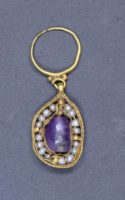
Earring; Period: Early Byzantine; circa: 6thC-7thC; Made in: Tharros. Materials: gold; with pearl and amethyst. Dimensions: Length: 35 millimetres. British Museum is closed 24, 25 and 26 December and 1 January, but is open every other day of the year. Fast facts about the British Museum: Founded: 1753, Collection size: 8 million objects, Oldest object in the collection: Stone chopping tool (nearly 2 million years old).

Spherical Small Container (pyxis) with Representations of Christ, Virgin and two Archangels. Period: Early Byzantine, circa: 6th–7th century A.D. Dimensions: Height x diameter: 7 x 9 cm (2 3/4 x 3 9/16 in.). Materials: Silver with gilding. This gilded silver pyxis of round kind was a container for antiques or scent made use of in Early Byzantine church ceremonies. The 4 figures created in repousse method reveal a bearded Christ offering a true blessing, the Virgin holding a symbol symbolic of her duties as Mother of God (Theotokos), as well as 2 angels worn lengthy sleeved chitons with segmenta on their shoulders and also hems. The cover is shed however could have had a dedicatory inscription.
The MFA is open 7 days a week. Monday and Tuesday 10 am–5 pm, Wednesday–Friday 10 am–10 pm, Saturday and Sunday 10 am–5 pm.

Gold Finger Ring; Early Byzantine. Period: 7thC – Early Byzantine. Excavated/Findspot: Smyrna (Asia, Turkey, Aegean Region, Anatolia (Turkey). British Museum is closed 24, 25 and 26 December and 1 January, but is open every other day of the year. Fast facts about the British Museum: Founded: 1753, Collection size: 8 million objects, Oldest object in the collection: Stone chopping tool (nearly 2 million years old).

Medal of Emperor Constantine The Great, Period: Early Byzantine circa: 4th century, Materials: silver. On view at ” Raum-1 Medaillen”. The Museum is one of the oldest collections of its kind in Europe. Its beginnings date back to the second half of the 16th century.
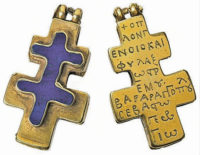
Byzantine Pectoral Cross (front and back), Period: Late Byzantine circa: 1200–1400 A.D. , Benaki Museum, Athens. Museum Description: “Gold pectoral in the form of a Resurrection cross with double horizontal arms set with lapis lazuli. The owner’s name, Georgios Varagkopoulos, is inscribed on the back together with his title Sevastos (Augustus), which reflects his high social standing and explains the luxurious quality of the materials and the fine workmanship. “
The Benaki Museum of Greek Culture is housed in one of the most beautiful neoclassical-style buildings in Athens, near the National Garden and the Hellenic Parliament. It was converted into a museum in order to shelter the collections of Antonis Benakis and was donated to the Greek nation by himself and his three sisters, Alexandra, Penelope and Argine. Following its most recent refurbishment (1989–2000), the building houses a unique exhibition on Greek culture arranged diachronically from prehistory to the 20th century.

Square Segmentum with Two Birds, Period: Early Byzantine; circa: 400s – 500s; Made in: Egypt, Material: tapestry; linen and wool. Dimensions: Overall: 10 x 10 cm (3 7/8 x 3 7/8 in.). The Cleveland Art Museum Hours: Tuesdays, Thursdays, Saturdays, Sundays 10:00 a.m.–5:00 p.m. Wednesdays, Fridays 10:00 a.m.–9:00 p.m. Closed Mondays.

Silver Dish; Period: Early Byzantine. 6th.c.(late) on a shallow foot; the centre decorated with Eros astride a ketos (sea monster) which he attacks with a trident. Found/Acquired: Anatolia, Modern Turkey. British Museum is closed 24, 25 and 26 December and 1 January, but is open every other day of the year. Fast facts about the British Museum: Founded: 1753, Collection size: 8 million objects, Oldest object in the collection: Stone chopping tool (nearly 2 million years old).

Bird Figure, Period: Early Byzantine, circa: 6thC-7thC; Made in: Egypt. Dimensions: Height: 2.6 inches. British Museum is closed 24, 25 and 26 December and 1 January, but is open every other day of the year. Fast facts about the British Museum: Founded: 1753, Collection size: 8 million objects, Oldest object in the collection: Stone chopping tool (nearly 2 million years old).
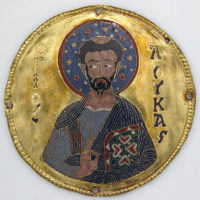
Medallion with Saint Luke from an Icon Frame, Period: Middle Byzantine, circa: ca. 1100, Made in Constantinople, Materials: Gold, silver, and enamel worked in cloisonné, Dimensions: Diam: 3 1/4 in. (8.3 cm) Mount: 20 1/2 x 15 x 7/8 in. (52.1 x 38.1 x 2.2 cm), On view at The Met Fifth Avenue in Gallery 303. The Metropolitan Museum of Art (New York) is one of the world’s largest and finest art museums. Its collection includes more than two million works of art spanning five thousand years of world culture, from prehistory to the present and from every part of the globe. Public Hours: 10:30 a.m.–5:30 p.m. Open seven days a week.
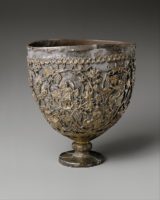
The Antioch Chalice, Period: Early Byzantine, circa: 500–550, Made in Antioch or Kaper Koraon, Materials: Silver, silver-gilt. On view at The Met Fifth Avenue in Gallery 300. The Metropolitan Museum of Art (New York) is one of the world’s largest and finest art museums. Its collection includes more than two million works of art spanning five thousand years of world culture, from prehistory to the present and from every part of the globe. Public Hours: 10:30 a.m.–5:30 p.m. Open seven days a week.
No entries were found.