

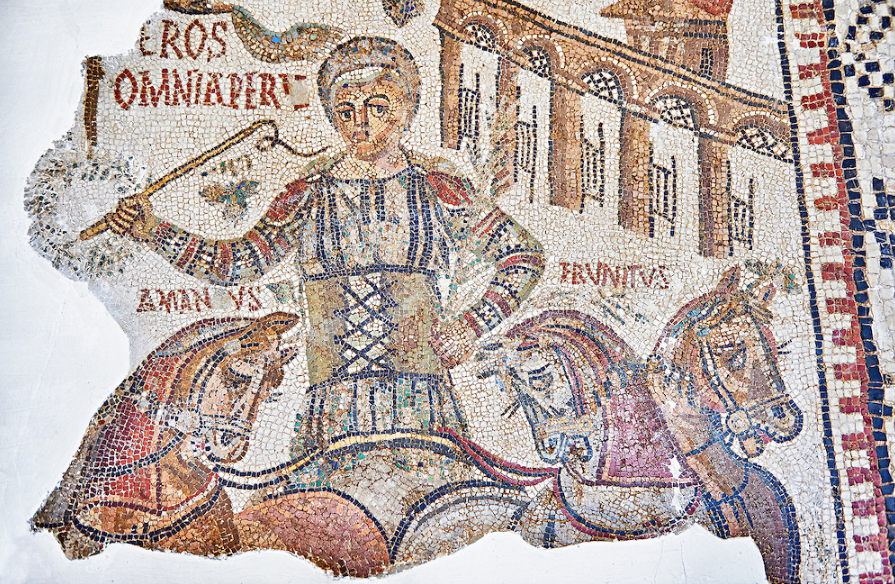
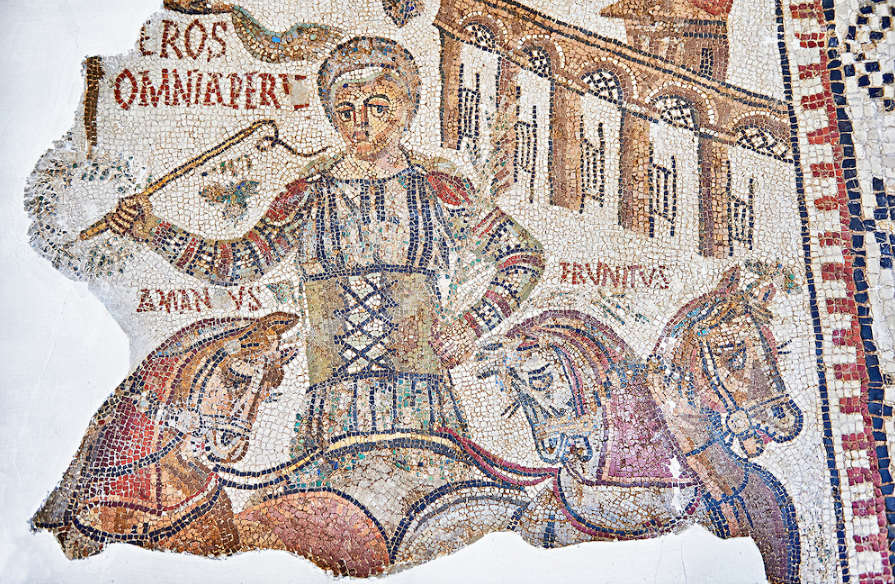
4th century Roman mosaic panel of Eros, a circus chariot rider of the Red Fraction. From Tunisia. The Bardo Museum, Tunis, Tunisia.
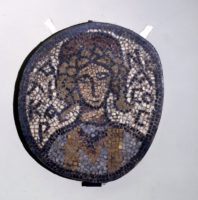
Circular mosaic. Personification of the city of Halicarnassus. Period: Late Roman; circa: 4th c.; Excavated/Place: Halicarnassus, Modern Turkey, Aegean Region, Anatolia. Materials: stone. Dimensions: Height: 54.5 centimetres Width: 49.5 centimetres. British Museum is closed 24, 25 and 26 December and 1 January, but is open every other day of the year. Fast facts about the British Museum: Founded: 1753, Collection size: 8 million objects, Oldest object in the collection: Stone chopping tool (nearly 2 million years old).
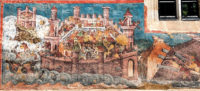
Siege of Constantinople in 1453 (fresco), Romanian School, (16th century) – Church of St George, Voronet Monastery, Bukovina, Romania.
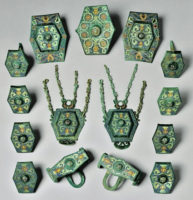
Harness Ornaments. Period: Late Roman; circa: 200–400. Geography: Made in Thrace (possibly). The Metropolitan Museum of Art (New York) is one of the world’s largest and finest art museums. Its collection includes more than two million works of art spanning five thousand years of world culture, from prehistory to the present and from every part of the globe. Public Hours: 10:30 a.m.–5:30 p.m. Open seven days a week.
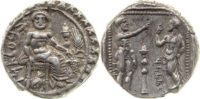
Silver coin, Period: 4 th. century B.C. 378BC-372BC (circa), Ruler: Datames, Minted in: Tarsus (Modern Turkey, Mersin Province) Museum Description: “Silver coin.(obverse) Baal seated r. (reverse) An standing r. facing Tarkumuwa.” British Museum is closed 24, 25 and 26 December and 1 January, but is open every other day of the year. Fast facts about the British Museum: Founded: 1753, Collection size: 8 million objects, Oldest object in the collection: Stone chopping tool (nearly 2 million years old).
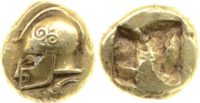
Electrum Greek Coin. Period: 6th c. B.C. circa: 521BC-478BC; Minted in: Phocaea (Asia, Modern Turkey,Marmara Region, Phocaea) Weight: 2.547 grammes. British Museum is closed 24, 25 and 26 December and 1 January, but is open every other day of the year. Fast facts about the British Museum: Founded: 1753, Collection size: 8 million objects, Oldest object in the collection: Stone chopping tool (nearly 2 million years old).
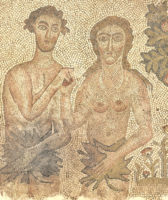
Fragment of a Floor Mosaic- Adam and Eve, Period: late 400s-early 500s, Early Byzantium, Northern Syria. The Cleveland Art Museum Hours: Tuesdays, Thursdays, Saturdays, Sundays 10:00 a.m.–5:00 p.m. Wednesdays, Fridays 10:00 a.m.–9:00 p.m. Closed Mondays.
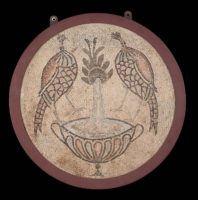
Mosaic, Two Peacocks Perch on a Fountain, Period: Early Byzantine, circa: A.D. 450–462. The MFA is open 7 days a week. Monday and Tuesday 10 am–5 pm, Wednesday–Friday 10 am–10 pm, Saturday and Sunday 10 am–5 pm.
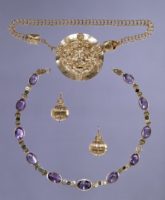
Museum Description: “Pair of gold earrings in the shape of a half globe with a small disc above, decorated in relief with a female dramatic mask.” Period: Roman, circa: 2nd century A.D. Made in/Findspot: Miletopolis, Modern Turkey, Aegean Region, Anatolia. Dimensions: Height: 3.81 centimetres. British Museum is closed 24, 25 and 26 December and 1 January, but is open every other day of the year. Fast facts about the British Museum: Founded: 1753, Collection size: 8 million objects, Oldest object in the collection: Stone chopping tool (nearly 2 million years old).
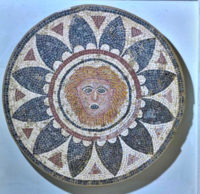
Roman Mosaic, Period: Late Roman; circa: 4th c.; Excavated/Place: Caria, Bodrum, Hadji Captan’s Field (Halicarnassus), Anatolia. Materials: stone. Dimensions: Diameter: 105.41 centimetres. Museum Description: Stone mosaic; medallion with mask of Phobos in the centre of rosette with 12 petals; triangles between rosette petals; the mask is red-brown and ochre; rosette petals are black and the triangles are red-brown. British Museum is closed 24, 25 and 26 December and 1 January, but is open every other day of the year. Fast facts about the British Museum: Founded: 1753, Collection size: 8 million objects, Oldest object in the collection: Stone chopping tool (nearly 2 million years old).
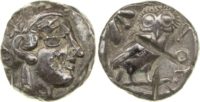
Museum Description: “Silver coin.(obverse) Head of Athena right, wearing earring and crested helmet decorated with olive-leaves. (reverse) Owl within incuse square, right; to left, olive-spray and crescent.” Period: 5 th century B.C., Minted in: Athens, Greece; Excavated/Findspot: Cilicia (Anatolia, Modern Turkey). British Museum is closed 24, 25 and 26 December and 1 January, but is open every other day of the year. Fast facts about the British Museum: Founded: 1753, Collection size: 8 million objects, Oldest object in the collection: Stone chopping tool (nearly 2 million years old).
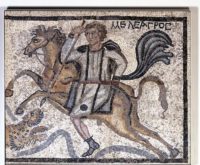
Mosaic Pavement; Period: Late Roman; circa: 4th c.; Excavated/Place: Halicarnassus, Modern Turkey, Aegean Region, Anatolia. Materials: stone. Dimensions: Height: 1.4 metres Length: 1.67 metres. Museum Description: Part of a panel from a mosaic pavement: Meleager, on horseback, spears a leopard. The panel is inscribed in Greek with the hero’s name.
British Museum is closed 24, 25 and 26 December and 1 January, but is open every other day of the year. Fast facts about the British Museum: Founded: 1753, Collection size: 8 million objects, Oldest object in the collection: Stone chopping tool (nearly 2 million years old).
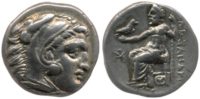
Silver coin of Alexander the Great; Greek; Date: 323BC-280BC; Kingdom of Macedonia, Minted in: Anatolia, Turkey (Uncertain mint, Western Asia Minor) Weight: 4.12 grammes. Die-axis: 12 o’clock. British Museum is closed 24, 25 and 26 December and 1 January, but is open every other day of the year. Fast facts about the British Museum: Founded: 1753, Collection size: 8 million objects, Oldest object in the collection: Stone chopping tool (nearly 2 million years old).
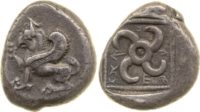
Silver Coin, Period: 5th. century B.C. 480BC-460BC (circa). Minted in Lycia, Anatolia, Modern Turkey. Ruler: Taththivaibi Museum Description: “(obverse) Griffin, curved wing, seated left; right forepaw raised. (reverse) Tetraskeles left; in dotted incuse square.” British Museum is closed 24, 25 and 26 December and 1 January, but is open every other day of the year. Fast facts about the British Museum: Founded: 1753, Collection size: 8 million objects, Oldest object in the collection: Stone chopping tool (nearly 2 million years old).
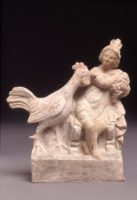
Terracotta figure of a boy with a cock, Period: Hellenistic, 1th c. BC. (circa) Material: Terracotta. Boy sprawling back across a low bench with finely modelled legs, leaning to the viewer’s right, both hands holding a big bunch of grapes out of the way of a very large predatory cock approaching from the left. Excavated: Myrina Ancient City, Anatolia. (Modern Turkey, Aliaga, Izmir) Acquisition date: 1891. British Museum is closed 24, 25 and 26 December and 1 January, but is open every other day of the year. Fast facts about the British Museum: Founded: 1753, Collection size: 8 million objects, Oldest object in the collection: Stone chopping tool (nearly 2 million years old).
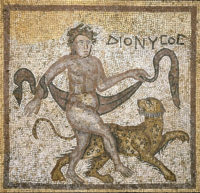
Mosaic Pavement; Period: Late Roman; circa: 4th c.; Excavated/Place: Halicarnassus, Modern Turkey, Aegean Region, Anatolia. Materials: stone. Dimensions: Height: 1.4 metres Width: 1.36 metres. Museum Description: Panel from a mosaic pavement, Dionysos dances to the right, with the panther running behind and looking up at him. Dionysos wears a grey-green wreath, and carries a strip of red drapery edged with black. The name of Dionysos is inscribed in Greek.
British Museum is closed 24, 25 and 26 December and 1 January, but is open every other day of the year. Fast facts about the British Museum: Founded: 1753, Collection size: 8 million objects, Oldest object in the collection: Stone chopping tool (nearly 2 million years old).
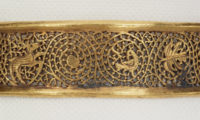
Bracelet, Period: Late Roman circa: 379 – 395 A.D. Medium: Gold. Dimensions: 1.4 × 6.3 cm (9/16 × 2 1/2 in.) Museum Description: “A simple gold band with plain flanged edges forms this openwork bracelet. A vegetal scroll weaves across the surface of the band, into which hunting scenes are inserted. On one side a hound chases a stag, while on the other a hound pursues a hare. ”
The J. Paul Getty Museum at the Getty Center in Los Angeles houses European paintings, drawings, sculpture, illuminated manuscripts, decorative arts, and photography from its beginnings to the present, gathered internationally.
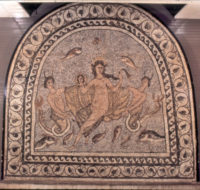
Mosaic of Venus and Tritons, Period: Late Roman; circa: 4th c.; Materials: stone. Dimensions: Height: 1.96 metres Width: 2.11 metres (at base) Excavated/Place: Caria, Bodrum, Hadji Captan’s Field (Halicarnassus). Excavated by: Sir Charles Thomas Newton, 1857. Museum Description: Venus is seated on a twisted shell, which is seen to the right; In her right hand she holds a circular mirror which reflects her full face; in her left hand she holds a long tress of hair; behind her is a veil held by a Triton on either side; the Tritons have curling forked tails and a pair of claws on their heads; below are two dolphins, one crab, and three. British Museum is closed 24, 25 and 26 December and 1 January, but is open every other day of the year. Fast facts about the British Museum: Founded: 1753, Collection size: 8 million objects, Oldest object in the collection: Stone chopping tool (nearly 2 million years old).
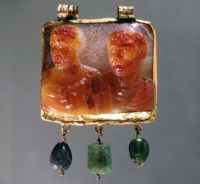
Busts of Two Emperors, Period: Roman, Circa: Late 3rd-early 4th century, Material: Chalcedony on gold. The museum is open to the public Tuesday through Sunday, 11:30 a.m.–5:30 p.m., except for federal holidays.
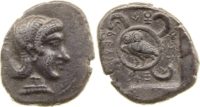
Silver Coin, Period: 5th c. 410 B.C. (circa) Minted in Lycia, Anatolia, Turkey. Ruler: Khariga, Materials: silver. Museum Description: Head of Aphrodite left, rows of formal curls on fore-head, hair fastened by band passing three times round it, and caught up behind; truncation on neck dotted; symbol, resembling T on neck.
(reverse) Tetraskeles right, members of which divide the legend; in inner ring, owl standing left, head to front; symbol at beginning of inscription: the whole. British Museum is closed 24, 25 and 26 December and 1 January, but is open every other day of the year. Fast facts about the British Museum: Founded: 1753, Collection size: 8 million objects, Oldest object in the collection: Stone chopping tool (nearly 2 million years old).
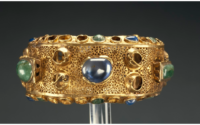
Bracelet, Period: Late Roman circa: about 379 – 395 A.D., Materials: Gold, emeralds, sapphires, and glass, Dimensions: 2.8 × 5.8 cm (1 1/8 × 2 1/4 in.). The J. Paul Getty Museum at the Getty Center in Los Angeles houses European paintings, drawings, sculpture, illuminated manuscripts, decorative arts, and photography from its beginnings to the present, gathered internationally.
No entries were found.