

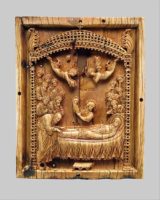
Icon with the Koimesis, Period: Middle Byzantine, circa: late 900s. Made in probably Constantinople. Material: Ivory. On view at The Met Fifth Avenue in Gallery 303. The Metropolitan Museum of Art (New York) is one of the world’s largest and finest art museums. Its collection includes more than two million works of art spanning five thousand years of world culture, from prehistory to the present and from every part of the globe. Public Hours: 10:30 a.m.–5:30 p.m. Open seven days a week.
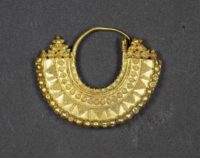
Gold Earring; semi-circular; with U-shaped loop to which is attached a similarly shaped thin plate of gold. Period: Middle Byzantine; 11thc.-12thc.; Found/Acquired: Syria. British Museum is closed 24, 25 and 26 December and 1 January, but is open every other day of the year.
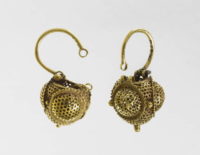
Earring, Period: Middle Byzantine circa: 11thc. Height: 1 inches. Material: gold. British Museum is closed 24, 25 and 26 December and 1 January, but is open every other day of the year. Fast facts about the British Museum: Founded: 1753, Collection size: 8 million objects, Oldest object in the collection: Stone chopping tool (nearly 2 million years old).
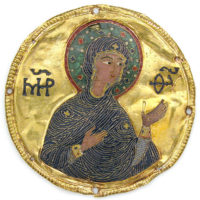
Medallion with the Virgin from an Icon Frame. Period: Middle Byzantine, circa: 1100, Made in Constantinople, Materials: Gold, silver, and enamel worked in cloisonné. The Metropolitan Museum of Art (New York) is one of the world’s largest and finest art museums. Its collection includes more than two million works of art spanning five thousand years of world culture, from prehistory to the present and from every part of the globe. Public Hours: 10:30 a.m.–5:30 p.m. Open seven days a week.
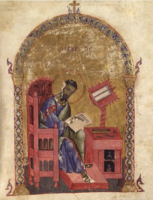
Evangelist Mark, Period: Middle Byzantine, ca. 1063. The museum is open to the public Tuesday through Sunday, 11:30 a.m.–5:30 p.m., except for federal holidays.
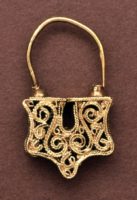
Gold Earring, Period: Middle Byzantine. circa: 12thc. Length: 1.24 inches. British Museum is closed 24, 25 and 26 December and 1 January, but is open every other day of the year. Fast facts about the British Museum: Founded: 1753, Collection size: 8 million objects, Oldest object in the collection: Stone chopping tool (nearly 2 million years old).
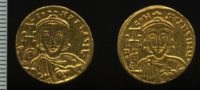
Gold coin; Ruler: Constantine V Copronymus; Leo III, Byzantine Emperor; Period: Middle Byzantine; circa: 737-741; Minted in: Constantinople. Weight: 4.4 grammes Diameter: 19 millimetres. British Museum is closed 24, 25 and 26 December and 1 January, but is open every other day of the year. Fast facts about the British Museum: Founded: 1753, Collection size: 8 million objects, Oldest object in the collection: Stone chopping tool (nearly 2 million years old).
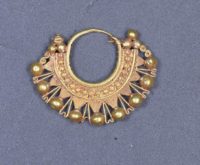
Earring; Period: Middle Byzantine; 11thc.-12thc. Material: gold. British Museum is closed 24, 25 and 26 December and 1 January, but is open every other day of the year.
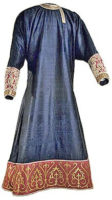
Tunic from Palermo; Blue and red velvet, gold embroidery, gold appliqués with cloisonné enamel and filligree, pearls; l. 141,5 cm, 343 cm wide at hem. Period: Middle Byzantine, circa: 2nd quarter of the 12th century. Kunsthistorisches Museum, Vienna. The Kunsthistorisches Museum was built in 1891 near the Imperial Palace to house the extensive collections of the imperial family. With its vast array of eminent works and the largest Bruegel collection in the world, it is considered one of the most eminent museums in the world. Opening hours June to August Daily, 10 a.m. – 6 p.m. Thu, 10 a.m. – 9 p.m. September to May Tue – Sun, 10 a.m. – 6 p.m. Thu, 10 a.m. – 9 p.m.
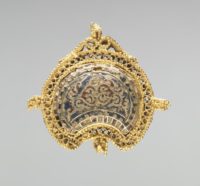
Crescent-Shaped Pendant, Period: Middle Byzantine; circa: 11th century. Materials: gold filigree with cloisonné enamel. Dimensions: 3 x 3.2 cm (1 3/16 x 1 1/4 in.). The Cleveland Art Museum Hours: Tuesdays, Thursdays, Saturdays, Sundays 10:00 a.m.–5:00 p.m. Wednesdays, Fridays 10:00 a.m.–9:00 p.m. Closed Mondays.
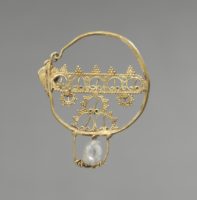
Earring with Openwork, Period: Middle Byzantine circa: 7th-9th Century. Materials: gold with a rock crystal bead. The Cleveland Art Museum Hours: Tuesdays, Thursdays, Saturdays, Sundays 10:00 a.m.–5:00 p.m. Wednesdays, Fridays 10:00 a.m.–9:00 p.m. Closed Mondays.
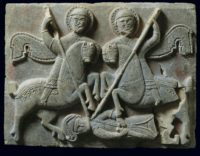
Relief from the exterior ornamentation of a church at Amaseia in the Pontos. Materials: stone, Period: Middle Byzantine, circa: (1197-1207). Showing the military saints Dimitrios and Theodoros slaying the Bulgarian tsar Skyloyannis or Kaloyannis. Dimensions: 0.33×0.44×0.05 m. Traces of red pigment are visible.
The Benaki Museum of Greek Culture is housed in one of the most beautiful neoclassical-style buildings in Athens, near the National Garden and the Hellenic Parliament. It was converted into a museum in order to shelter the collections of Antonis Benakis and was donated to the Greek nation by himself and his three sisters, Alexandra, Penelope and Argine. Following its most recent refurbishment (1989–2000), the building houses a unique exhibition on Greek culture arranged diachronically from prehistory to the 20th century.
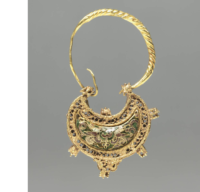
Crescent-Shaped Earring, Materials: Gold filigree with cloisonné enamel. Period: Middle Byzantine circa: 1000-1100. Dimensions: 2.3 x 2.6 cm (7/8 x 1 in.). The Cleveland Art Museum Hours: Tuesdays, Thursdays, Saturdays, Sundays 10:00 a.m.–5:00 p.m. Wednesdays, Fridays 10:00 a.m.–9:00 p.m. Closed Mondays.
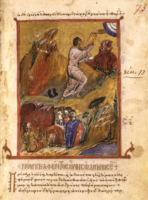
Psalter and New Testament, Period: Middle Byzantine, circa. 1084 A.D. The museum is open to the public Tuesday through Sunday, 11:30 a.m.–5:30 p.m., except for federal holidays.
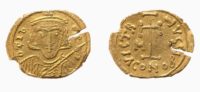
Gold coin. Ruler: Tiberius III, Byzantine Emperor; Period: Middle Byzantine; circa: 705-711; Minted in: Ravenna, Italy. British Museum is closed 24, 25 and 26 December and 1 January, but is open every other day of the year. Fast facts about the British Museum: Founded: 1753, Collection size: 8 million objects, Oldest object in the collection: Stone chopping tool (nearly 2 million years old).
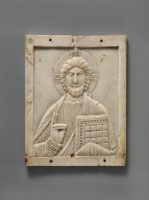
Icon with Christ Pantokrator, Period: 11th–12th century, Middle Byzantine. Material: Ivory. Dimensions: 3 13/16 x 3 x 3/16 in. (9.7 x 7.6 x 0.4 cm). On view at The Met Fifth Avenue in Gallery 303. The Metropolitan Museum of Art (New York) is one of the world’s largest and finest art museums. Its collection includes more than two million works of art spanning five thousand years of world culture, from prehistory to the present and from every part of the globe. Public Hours: 10:30 a.m.–5:30 p.m. Open seven days a week.
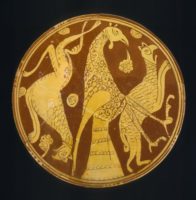
Dish of brown, fine-grained clay covered with a white slip. Period: Middle Byzantine; circa: Late 12th-early 13th c. The decoration is in champlevé, while the individual details are incised. A large standing bird is pictured between two bird-shaped animals resembling griffons but without wings. Dimensions: H. 0.07, Diam. of rim 0.235, Diam. of base 0.08 m. On the ground tufted plants. Yellow, very good quality glaze covers the inner surface and the edge of the rim on the outside. The Benaki Museum of Greek Culture is housed in one of the most beautiful neoclassical-style buildings in Athens, near the National Garden and the Hellenic Parliament.
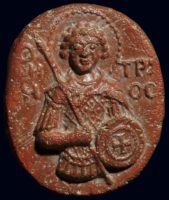
Oval cameo of glass paste, with a representation of St Dimitrios. Period: Middle Byzantine; circa: 12th c. Materials: glass. Made in: Constantinople. The Benaki Museum of Greek Culture is housed in one of the most beautiful neoclassical-style buildings in Athens, near the National Garden and the Hellenic Parliament. It was converted into a museum in order to shelter the collections of Antonis Benakis and was donated to the Greek nation by himself and his three sisters, Alexandra, Penelope and Argine. Following its most recent refurbishment (1989–2000), the building houses a unique exhibition on Greek culture arranged diachronically from prehistory to the 20th century.
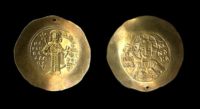
Gold coin; Ruler: Manuel I Comnenus, Byzantine emperor; Period: Middle Byzantine; circa: 1143-1180; Minted in Constantinople. British Museum is closed 24, 25 and 26 December and 1 January, but is open every other day of the year. Fast facts about the British Museum: Founded: 1753, Collection size: 8 million objects, Oldest object in the collection: Stone chopping tool (nearly 2 million years old).
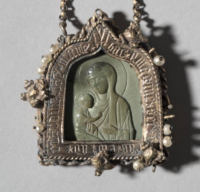
Pendant Icon with the Virgin “Dexiokratousa” and Frame with Winged Bull of Saint Luke on the back, Pendant 1100s; Frame mid. Period: Middle Byzantine. Materials: Steatite, Gilt silver, Pearls. The Cleveland Art Museum Hours: Tuesdays, Thursdays, Saturdays, Sundays 10:00 a.m.–5:00 p.m. Wednesdays, Fridays 10:00 a.m.–9:00 p.m. Closed Mondays.