

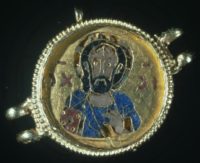
Double-sided circular jewellery attachment. Christ Pantokrator is depicted on one side and the Virgin Orans on the other side. Period: Late Byzantine; circa: early 12th century. Dimensions: 0,026 m. The Benaki Museum of Greek Culture is housed in one of the most beautiful neoclassical-style buildings in Athens, near the National Garden and the Hellenic Parliament. It was converted into a museum in order to shelter the collections of Antonis Benakis and was donated to the Greek nation by himself and his three sisters, Alexandra, Penelope and Argine. Following its most recent refurbishment (1989–2000), the building houses a unique exhibition on Greek culture arranged diachronically from prehistory to the 20th century.
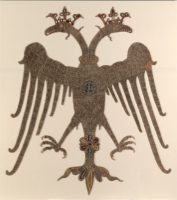
Altar Cloth or Podea. Period: Late Byzantine, circa: late 14th century. Made in: probably Greece or Constantinople. Materials: Silk, embroidery. Dimensions: 58 1/2 x 51 1/8 in. (148.6 x 129.9 cm).
Museum Description: “The double-headed eagle became the primary symbol of the state during the late Byzantine centuries and was also adopted for liturgical use. This huge eagle was probably used as an altar cloth or as a podea, a skirt hung beneath an icon. The inscription, which connects the owner with distinguished imperial dynasties, exaggerated the claims of a pretender to the patriarchal throne.”
On view at The Met Fifth Avenue in Gallery 303. The Metropolitan Museum of Art (New York) is one of the world’s largest and finest art museums. Its collection includes more than two million works of art spanning five thousand years of world culture, from prehistory to the present and from every part of the globe. Public Hours: 10:30 a.m.–5:30 p.m. Open seven days a week.
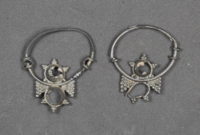
Pair of earrings, Period: Middle Byzantine (10thC-11thC). Material: silver. Diameter: 3.4 centimetres (max). British Museum is closed 24, 25 and 26 December and 1 January, but is open every other day of the year. Fast facts about the British Museum: Founded: 1753, Collection size: 8 million objects, Oldest object in the collection: Stone chopping tool (nearly 2 million years old).
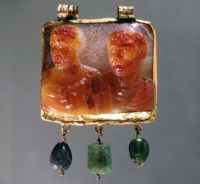
Busts of Two Emperors, Period: Roman, Circa: Late 3rd-early 4th century, Material: Chalcedony on gold. The museum is open to the public Tuesday through Sunday, 11:30 a.m.–5:30 p.m., except for federal holidays.
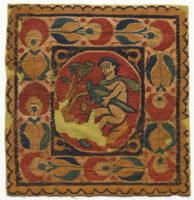
Square Segmentum, Period: Early Byzantine; circa: 5th century. Type of art work: Textile, Materials: tapestry; linen and wool. The Cleveland Art Museum Hours: Tuesdays, Thursdays, Saturdays, Sundays 10:00 a.m.–5:00 p.m. Wednesdays, Fridays 10:00 a.m.–9:00 p.m. Closed Mondays.
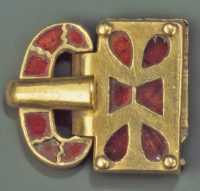
Buckle with Garnets. Period: Early Byzantine; circa:400–500 A.D. Material: gold. Made in: Constantinople. The Metropolitan Museum of Art (New York) is one of the world’s largest and finest art museums. Its collection includes more than two million works of art spanning five thousand years of world culture, from prehistory to the present and from every part of the globe. Public Hours: 10:30 a.m.–5:30 p.m. Open seven days a week.
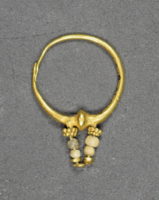
Earring; Period: Early Byzantine. circa: 5thC-7thC. Length: 27 millimetres. Materials: gold. British Museum is closed 24, 25 and 26 December and 1 January, but is open every other day of the year. Fast facts about the British Museum: Founded: 1753, Collection size: 8 million objects, Oldest object in the collection: Stone chopping tool (nearly 2 million years old).
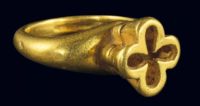
Ring with cross-shaped quatrefoil calyx bezel. Materials: gold. Period: Early Byzantine; circa: 6th-7th century. The Benaki Museum of Greek Culture is housed in one of the most beautiful neoclassical-style buildings in Athens, near the National Garden and the Hellenic Parliament.
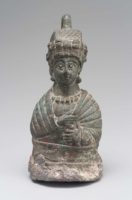
Steelyard weight in the form of a bust of an empress, Period: Early Byzantine Period, circa: 5th century A.D. Material: Bronze. The MFA is open 7 days a week. Monday and Tuesday 10 am–5 pm, Wednesday–Friday 10 am–10 pm, Saturday and Sunday 10 am–5 pm.
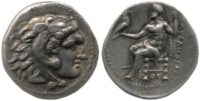
Silver Coin of Alexander the Great. Head of young Herakles, right, in lion scalp. (reverse) Zeus seated, left, holding eagle and sceptre. Date: 323BC-280BC (circa). Minted in: Anatolia, Modern Turkey (Uncertain Mint, Western Asia Minor) British Museum is closed 24, 25 and 26 December and 1 January, but is open every other day of the year. Fast facts about the British Museum: Founded: 1753, Collection size: 8 million objects, Oldest object in the collection: Stone chopping tool (nearly 2 million years old).
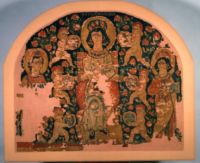
Hanging with Hestia Polyolbus, Period: Early Byzantine, First half of 6th Century. The museum is open to the public Tuesday through Sunday, 11:30 a.m.–5:30 p.m., except for federal holidays.
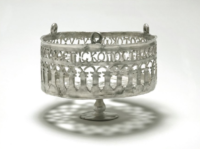
Openwork Lamp with Openwork Inscription, Period: Middle Byzantine, circa Mid. 6th Century A.D. The museum is open to the public Tuesday through Sunday, 11:30 a.m.–5:30 p.m., except for federal holidays.
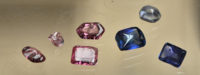
Sapphire and Tourmaline Ring Gems; Period: Early Byzantine, circa: 6-7th century. Findspot/Location: Constantinople. Materials: Sapphire, Tourmaline. In the Istanbul Archaeological Museum collections, there are rich and very important works of art belonging to various civilizations from the regions from Africa to Balkans , from Anatolia and Mesopotamia to Arab Peninsula and Afghanistan that were in the borders of the Ottoman Empire.
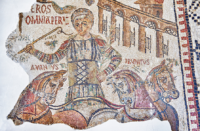
4th century Roman mosaic panel of Eros, a circus chariot rider of the Red Fraction. From Tunisia. The Bardo Museum, Tunis, Tunisia.
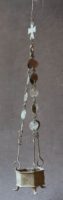
Censer; Period: Early Byzantine; circa: 6thc.-7thc.; Found: Syria. Materials: copper alloy. Dimensions: Diameter: 79 millimetresLength: 475 millimetres (suspension unit)Height: 61 millimetres. British Museum is closed 24, 25 and 26 December and 1 January, but is open every other day of the year. Fast facts about the British Museum: Founded: 1753, Collection size: 8 million objects, Oldest object in the collection: Stone chopping tool (nearly 2 million years old).
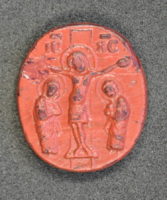
Cameo; opaque red; Period: Late Byzantine circa: 13 thc. Materials: glass. Made in: Venice. The Crucifixion with St John and St Mary and inscription, in relief. British Museum is closed 24, 25 and 26 December and 1 January, but is open every other day of the year. Fast facts about the British Museum: Founded: 1753, Collection size: 8 million objects, Oldest object in the collection: Stone chopping tool (nearly 2 million years old).
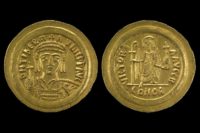
Gold Coin, Ruler: Maurice Tiberius; Period: Early Byzantine; circa: 582-602; Minted in: Ravenna. British Museum is closed 24, 25 and 26 December and 1 January, but is open every other day of the year. Fast facts about the British Museum: Founded: 1753, Collection size: 8 million objects, Oldest object in the collection: Stone chopping tool (nearly 2 million years old).
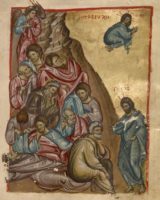
The Agony in the Garden, Manuscript, Period: Late Byzantine; circa: 1200 to 1299 A.D. Place: Nicaea. (Modern Turkey) Material: Tempera colors and gold leaf on parchment bound between wood boards covered with light brown velvet. Dimensions: Leaf: 20.6 × 14.9 cm (8 1/8 × 5 7/8 in.)
Museum Description: “Placed within the Gospel of Matthew, the full-page miniature of the Agony in the Garden represents one of the more powerfully emotional moments in Jesus’ Passion. After the Passover meal, Jesus and his apostles retire to the Garden of Gethsemane, where Jesus foretells Saint Peter’s betrayal. Jesus then asks his closest disciples to stay awake with him, but later, while he prays, the apostles fall asleep.
The artist represents Jesus twice in the miniature: once confronting Peter at the bottom of the image and then praying above. Jesus’ feelings of isolation and abandonment as he prays are expressed visually by his physical separation not only from the apostles but also from the angel shown behind him. Against the hilly landscape, the apostles huddle together in their sleep, their bodies forming a mound almost as large as the mountain itself. The crisp folds of their garments are made of embedded geometric forms that echo the shape of the rocks at the top of the mountain.“
The J. Paul Getty Museum at the Getty Center in Los Angeles houses European paintings, drawings, sculpture, illuminated manuscripts, decorative arts, and photography from its beginnings to the present, gathered internationally.
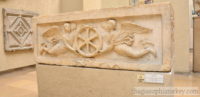
Sarcophagus – from the imperial cemetery beside the Church of the Holy Apostles. Period: Early Byzantine; circa: early 5th century. Material: Marble, Findspot: Sariguzel/Fatih – Istanbul.
In the Istanbul Archaeological Museum collections, there are rich and very important works of art belonging to various civilizations from the regions from Africa to Balkans , from Anatolia and Mesopotamia to Arab Peninsula and Afghanistan that were in the borders of the Ottoman Empire.
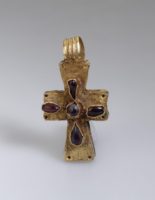
Cross, Period: Early Byzantine, circa: 5th-6th century, Materials: golad and garnet. Dimensions: 3,8×1,9 cm. The collection of the State Hermitage includes over 3 million works of art and world culture artefacts. It contains paintings, graphic works, sculptures, works of applied art, archaeological artefacts and numismatic objects. The Hermitage is considered to have been founded in 1764, when Empress Catherine the Great acquired an impressive collection of works from the Berlin merchant Johann Ernst Gotzkowsky. The museum celebrates the anniversary of its founding each year on 7 December, St. Catherine’s Day. Opening Hours: Tuesday, Thursday, Saturday, Sunday: 10.30-18.00 Wednesday, Friday: 10.30-21.00 Closed: Monday.