

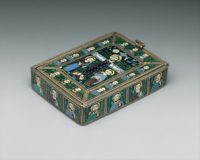
The Fieschi Morgan Staurotheke, Period: Middle Byzantine, circa: early 9th century, Made in Constantinople, Materials: Gilded silver, gold, enamel worked in cloisonné, and niello. On view at The Met Fifth Avenue in Gallery 303. The Metropolitan Museum of Art (New York) is one of the world’s largest and finest art museums. Its collection includes more than two million works of art spanning five thousand years of world culture, from prehistory to the present and from every part of the globe. Public Hours: 10:30 a.m.–5:30 p.m. Open seven days a week.
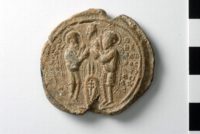
Seal, Theodore Kastamonites, Sebastos. The two Saints Theodore standing with their hands upraised towards the manus Dei above. Between them are their spears and a shield embossed with a patriarchal cross. This remarkable seal may well have belonged to Theodore Kastamonites, the maternal uncle of the emperor Isaac II Angelos (1185–1195, 1203–1204), who tended to the internal affairs of the empire during his nephew’s first reign. The museum is open to the public Tuesday through Sunday, 11:30 a.m.–5:30 p.m., except for federal holidays.
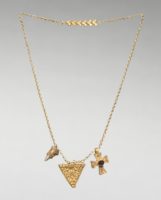
Chain with Two Pendants and a Cross, Period: Early Byzantine; circa: 6th century. Type of art work: Jewelry Materials: gold with granulation and a garnet. Overall: h. 45.7 cm (18 in.); Part 1: 2.6 x 2.6 cm (1 x 1 in.); Part 2: 2.8 x 1.9 cm (1 1/16 x 3/4 in.); Part 3: 1.9 x 1.1 cm (3/4 x 7/16 in.). The Cleveland Art Museum Hours: Tuesdays, Thursdays, Saturdays, Sundays 10:00 a.m.–5:00 p.m. Wednesdays, Fridays 10:00 a.m.–9:00 p.m. Closed Mondays.
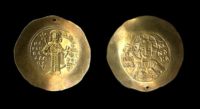
Gold coin; Ruler: Manuel I Comnenus, Byzantine emperor; Period: Middle Byzantine; circa: 1143-1180; Minted in Constantinople. British Museum is closed 24, 25 and 26 December and 1 January, but is open every other day of the year. Fast facts about the British Museum: Founded: 1753, Collection size: 8 million objects, Oldest object in the collection: Stone chopping tool (nearly 2 million years old).
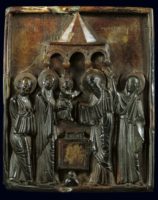
Small steatite icon of the Presentation of Christ in the Temple , in high relief. Period: Late Byzantine; circa: 14th c. Dimensions: 0.11×0.09 m.
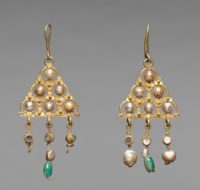
Earrings (pair), Period: Early Byzantine; circa: 600s; Materials: gold, pearls, glass, and emeralds. The Cleveland Art Museum Hours: Tuesdays, Thursdays, Saturdays, Sundays 10:00 a.m.–5:00 p.m. Wednesdays, Fridays 10:00 a.m.–9:00 p.m. Closed Mondays.
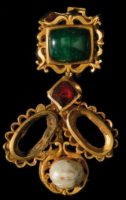
Three sections of a Gold necklace. Materials: sapphires, emeralds, cornelians and pearls. Period: Early Byzantine; circa: 5th c. Made in: Alexandria, Egypt. Their height varies from 0.05 to 0.06 m. The Benaki Museum of Greek Culture is housed in one of the most beautiful neoclassical-style buildings in Athens, near the National Garden and the Hellenic Parliament.
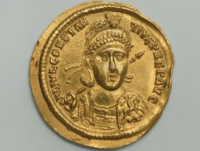
Solidus of Constantius II (333–361). Material: Gold. The museum is open to the public Tuesday through Sunday, 11:30 a.m.–5:30 p.m., except for federal holidays.
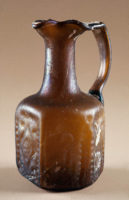
Hexagonal jug with Christian symbols, Material: Glass, mold-blown. Place of Manufacture: Jerusalem. Period: Early Byzantine circa: Late 6th–early 7th century A.D. Dimensions: Height: 13.2 cm (5 3/16 in.).The MFA is open 7 days a week. Monday and Tuesday 10 am–5 pm, Wednesday–Friday 10 am–10 pm, Saturday and Sunday 10 am–5 pm.
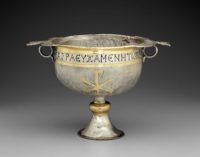
Silver Chalice, Period: Early Byzantine, circa: 6th century A.D. Dimensions: Height (max.): 18 cm. (7 1/16 in.); Width (max. at handles): 26.6 cm (10 1/2 in.); Width (bowl): 16 cm (6 5/16 in.).
The cup has actually ring handles topped by flat plates of lunate kind with trapezoidal forecasts in the line of the handles. An inscribed band in between the manages is flanked by a gilded profiled rim (above) and a gilded profiled band listed below. The body is hemispherical. The high foot includes a concave, then round stem and a cone-shaped assistance with broad, horizontal flange listed below. The niello-inlaid engraving (in Greek uppercase) equates: “Sarah hoped and made [this] using to the First Martyr” (Saint Stephen). Likewise (each side) is a gilded Christogram made up of a chi and rho (the very first 2 letters of Christ’s name in Greek) flanked by alpha and Omega. These are the first and last letters of the Greek alphabet, symbolizing that Christ is the beginning and end of all things. Locations of the bowl are completed; foot is corrected and repaired.
The MFA is open 7 days a week. Monday and Tuesday 10 am–5 pm, Wednesday–Friday 10 am–10 pm, Saturday and Sunday 10 am–5 pm.
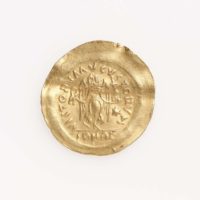
Tremissis of Justinian I, Period: Early Byzantine Period, circa: 552–565 A.D. , Minted in: Ravenna, Material: Gold. The Museum of Fine Arts, Boston is open 7 days a week. Monday and Tuesday 10 am–5 pm, Wednesday–Friday 10 am–10 pm, Saturday and Sunday 10 am–5 pm.
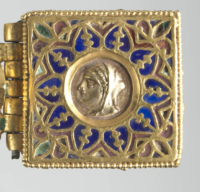
Buckle with Embossed Head in Profile, Period: Early Byzantine, circa: 400-600. Materials: gold, lapis lazuli, and glass. The Cleveland Art Museum Hours: Tuesdays, Thursdays, Saturdays, Sundays 10:00 a.m.–5:00 p.m. Wednesdays, Fridays 10:00 a.m.–9:00 p.m. Closed Mondays.
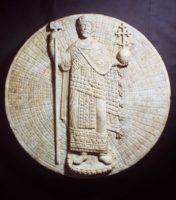
Roundel with Emperor John II Comnenus. Period: Byzantine, ca. 1110 – 1118. Material: marble. The museum is open to the public Tuesday through Sunday, 11:30 a.m.–5:30 p.m., except for federal holidays.
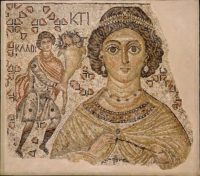
Fragment of a Floor Mosaic with a Personification of Ktisis, Period: Early Byzantine circa: 500–550, with modern restoration. Materials: Marble and glass. The Metropolitan Museum of Art (New York) is one of the world’s largest and finest art museums. Its collection includes more than two million works of art spanning five thousand years of world culture, from prehistory to the present and from every part of the globe. Public Hours: 10:30 a.m.–5:30 p.m. Open seven days a week.
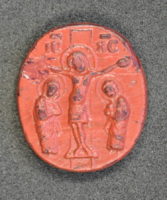
Cameo; opaque red; Period: Late Byzantine circa: 13 thc. Materials: glass. Made in: Venice. The Crucifixion with St John and St Mary and inscription, in relief. British Museum is closed 24, 25 and 26 December and 1 January, but is open every other day of the year. Fast facts about the British Museum: Founded: 1753, Collection size: 8 million objects, Oldest object in the collection: Stone chopping tool (nearly 2 million years old).
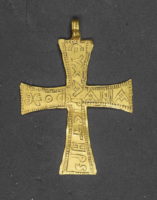
Pectoral cross. Material: gold; flat; with Greek inscription and dotted borders; open loop at top; plain back. Period: Early Byzantine. British Museum is closed 24, 25 and 26 December and 1 January, but is open every other day of the year. Fast facts about the British Museum: Founded: 1753, Collection size: 8 million objects, Oldest object in the collection: Stone chopping tool (nearly 2 million years old).
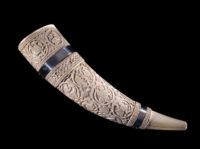
Oliphant; Material: ivory; with two silver bands. Period: Middle Byzantine / 10thC-11thC. Made in: Italy (southern)(Europe,Italy). British Museum is closed 24, 25 and 26 December and 1 January, but is open every other day of the year. Fast facts about the British Museum: Founded: 1753, Collection size: 8 million objects, Oldest object in the collection: Stone chopping tool (nearly 2 million years old).
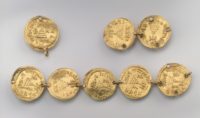
Fragment of a Necklace Consisting of Eight Coins, Period: Early Byzantine. circa: Between 637 and 646. Found: Pereshchepina Complex. near Poltava, the Village of Malaya Pereshchepina. Material: gold. The collection of the State Hermitage includes over 3 million works of art and world culture artefacts. It contains paintings, graphic works, sculptures, works of applied art, archaeological artefacts and numismatic objects. The Hermitage is considered to have been founded in 1764, when Empress Catherine the Great acquired an impressive collection of works from the Berlin merchant Johann Ernst Gotzkowsky. The museum celebrates the anniversary of its founding each year on 7 December, St. Catherine’s Day. Opening Hours: Tuesday, Thursday, Saturday, Sunday: 10.30-18.00 Wednesday, Friday: 10.30-21.00 Closed: Monday.
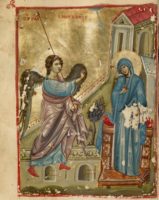
The Annunciation, Manuscript. Period: Late Byzantine, circa: 13th century. Dimensions: Leaf: 20.6 × 14.9 cm (8 1/8 × 5 7/8 in.). Place: Nicaea, Medium: Tempera colors and gold leaf on parchment. (Modern Iznik, Turkey). The J. Paul Getty Museum at the Getty Center in Los Angeles houses European paintings, drawings, sculpture, illuminated manuscripts, decorative arts, and photography from its beginnings to the present, gathered internationally.
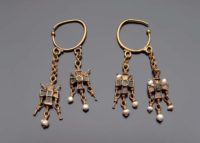
Earrings with Inlaid Cross-Shaped Pendants, Period: Early Byzantine Period, circa: 7th century A.D. Materials: Gold, glass paste and pearls. The MFA is open 7 days a week. Monday and Tuesday 10 am–5 pm, Wednesday–Friday 10 am–10 pm, Saturday and Sunday 10 am–5 pm.