

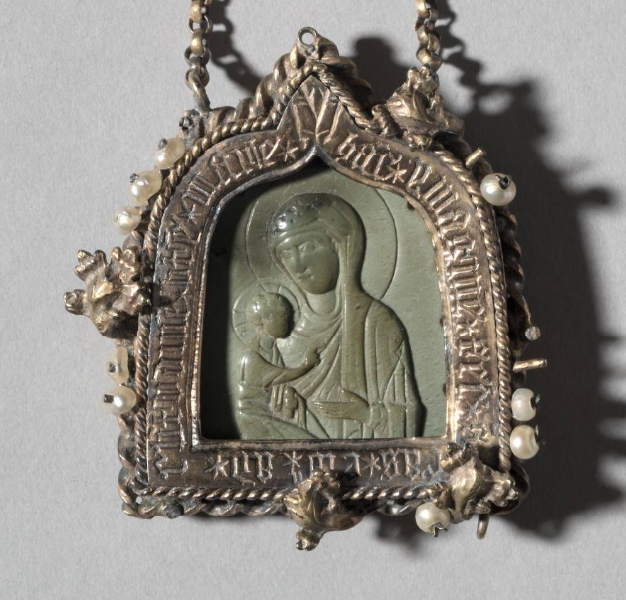
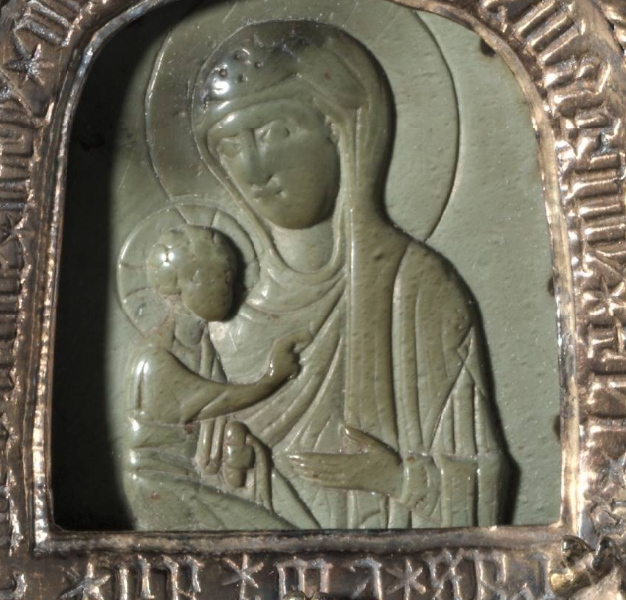
Pendant Icon with the Virgin “Dexiokratousa” and Frame with Winged Bull of Saint Luke on the back, Pendant 1100s; Frame mid. Period: Middle Byzantine. Materials: Steatite, Gilt silver, Pearls. The Cleveland Art Museum Hours: Tuesdays, Thursdays, Saturdays, Sundays 10:00 a.m.–5:00 p.m. Wednesdays, Fridays 10:00 a.m.–9:00 p.m. Closed Mondays.
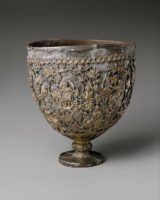
The Antioch Chalice, Period: Early Byzantine, circa: 500–550, Made in Antioch or Kaper Koraon, Materials: Silver, silver-gilt. On view at The Met Fifth Avenue in Gallery 300. The Metropolitan Museum of Art (New York) is one of the world’s largest and finest art museums. Its collection includes more than two million works of art spanning five thousand years of world culture, from prehistory to the present and from every part of the globe. Public Hours: 10:30 a.m.–5:30 p.m. Open seven days a week.
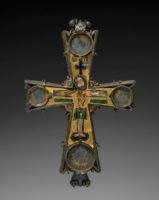
Pectoral Cross. Period: Middle Byzantine; circa: 900s. Made in: Constantinople. Materials: gold, gilt-silver, and cloisonné enamel. Overall: h. 12.4 cm (4 7/8 in.). The Cleveland Art Museum Hours: Tuesdays, Thursdays, Saturdays, Sundays 10:00 a.m.–5:00 p.m. Wednesdays, Fridays 10:00 a.m.–9:00 p.m. Closed Mondays.
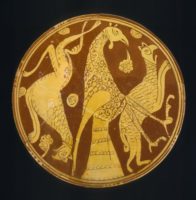
Dish of brown, fine-grained clay covered with a white slip. Period: Middle Byzantine; circa: Late 12th-early 13th c. The decoration is in champlevé, while the individual details are incised. A large standing bird is pictured between two bird-shaped animals resembling griffons but without wings. Dimensions: H. 0.07, Diam. of rim 0.235, Diam. of base 0.08 m. On the ground tufted plants. Yellow, very good quality glaze covers the inner surface and the edge of the rim on the outside. The Benaki Museum of Greek Culture is housed in one of the most beautiful neoclassical-style buildings in Athens, near the National Garden and the Hellenic Parliament.
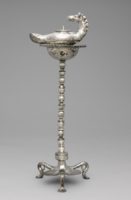
Lamp and Stand, Period: Early Byzantine, 4th century. Materials: Silver. 9.2 x 16 x 7 cm (3 9/16 x 6 1/4 x 2 3/4 in.). The Cleveland Art Museum Hours: Tuesdays, Thursdays, Saturdays, Sundays 10:00 a.m.–5:00 p.m. Wednesdays, Fridays 10:00 a.m.–9:00 p.m. Closed Mondays.
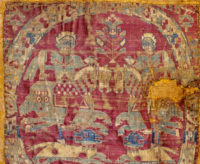
Textile Fragment, Materials: silk and cotton. Period: Middle Byzantine, circa: 8thc-9thc. Rectangular panel of woven silk sen onto a larger cotton cloth of irregular, roughly rectangular shape; two hunters on horseback, in a round frame with floral ornament. British Museum is closed 24, 25 and 26 December and 1 January, but is open every other day of the year.
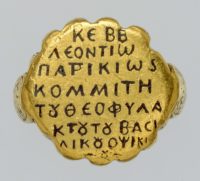
Ring of Leontios, Period: Middle Byzantine, circa: 1000, Materials: Gold, niello, Inscribed: “Lord help Leontius, Patrician and Count of imperial Obsikion guarded by God”. The ring came from Leontios of the district of Opsikion, in exactly what is currently northwestern Turkey. Patrikios as well as komes were Roman titles that moved in definition throughout the Byzantine period; it promises that Leontios was the guv of the district or an upper-level general. On view at The Met Fifth Avenue in Gallery 303 . The Metropolitan Museum of Art (New York) is one of the world’s largest and finest art museums. Its collection includes more than two million works of art spanning five thousand years of world culture, from prehistory to the present and from every part of the globe. Public Hours: 10:30 a.m.–5:30 p.m. Open seven days a week.
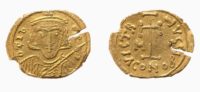
Gold coin. Ruler: Tiberius III, Byzantine Emperor; Period: Middle Byzantine; circa: 705-711; Minted in: Ravenna, Italy. British Museum is closed 24, 25 and 26 December and 1 January, but is open every other day of the year. Fast facts about the British Museum: Founded: 1753, Collection size: 8 million objects, Oldest object in the collection: Stone chopping tool (nearly 2 million years old).
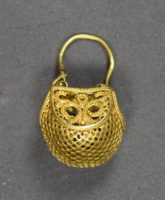
Earring; Period: Middle Byzantine circa: 10thC-12thC. Materials: gold. British Museum is closed 24, 25 and 26 December and 1 January, but is open every other day of the year. Fast facts about the British Museum: Founded: 1753, Collection size: 8 million objects, Oldest object in the collection: Stone chopping tool (nearly 2 million years old).
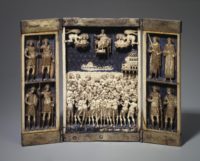
Triptych Showing the Forty Martyrs, Period: Middle Byzantine; circa: Late 11th – early 12th century. Materials: ivory and silver (frame). Technique: carved and painted. Dimensions: 18,5×24,2 cm. The collection of the State Hermitage includes over 3 million works of art and world culture artefacts. It contains paintings, graphic works, sculptures, works of applied art, archaeological artefacts and numismatic objects. The Hermitage is considered to have been founded in 1764, when Empress Catherine the Great acquired an impressive collection of works from the Berlin merchant Johann Ernst Gotzkowsky. The museum celebrates the anniversary of its founding each year on 7 December, St. Catherine’s Day. Opening Hours: Tuesday, Thursday, Saturday, Sunday: 10.30-18.00 Wednesday, Friday: 10.30-21.00 Closed: Monday.
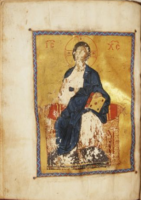
Gospels in Greek with Canon Tables and Prologues, Period: Middle Byzantine, 12th century A.D. The museum is open to the public Tuesday through Sunday, 11:30 a.m.–5:30 p.m., except for federal holidays.
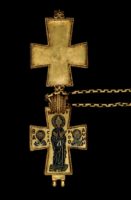
Reliquary Cross; Materials: Cloisonné Enamel and Gold, Period: Middle Byzantine (10thc.) Made in: Constantinople. Museum Description: “Decorated with a standing figure of the Virgin, wearing chiton and maphorion, flanked by busts of St Basil and St Gregory Thaumaturgus; cylindrical gold chain connected to pendant; part of chain in another style.” British Museum is closed 24, 25 and 26 December and 1 January, but is open every other day of the year. Fast facts about the British Museum: Founded: 1753, Collection size: 8 million objects, Oldest object in the collection: Stone chopping tool (nearly 2 million years old).
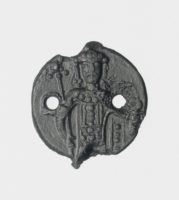
Molivdovul. Manuel I Comnenus, Period: Middle Byzantine, circa: 1143-1180. Material: lead. The collection of the State Hermitage includes over 3 million works of art and world culture artefacts. It contains paintings, graphic works, sculptures, works of applied art, archaeological artefacts and numismatic objects. The Hermitage is considered to have been founded in 1764, when Empress Catherine the Great acquired an impressive collection of works from the Berlin merchant Johann Ernst Gotzkowsky. The museum celebrates the anniversary of its founding each year on 7 December, St. Catherine’s Day. Opening Hours: Tuesday, Thursday, Saturday, Sunday: 10.30-18.00 Wednesday, Friday: 10.30-21.00 Closed: Monday.
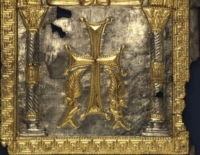
Book Cover with a Cross Flanked by Cypress Trees, Period: Early Byzantine, circa: Mid 6th Century. The museum is open to the public Tuesday through Sunday, 11:30 a.m.–5:30 p.m., except for federal holidays.
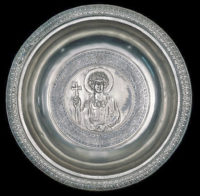
Bowl; circular medallion with half-figure of a nimbed saint, St Sergios. Period: Early Byzantine; circa: 641-651; Materials: Silver. Production place: Made in Tarsus, Anatolia (Modern Turkey). Found: Acheripoetos Monastery, Cyprus,Nicosia. British Museum is closed 24, 25 and 26 December and 1 January, but is open every other day of the year.
Fast facts about the British Museum: Founded: 1753, Collection size: 8 million objects, Oldest object in the collection: Stone chopping tool (nearly 2 million years old).
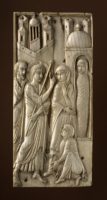
The Raising of Lazarus, Panel; ivory; Christ with cruciferous nimbus relocate to right with hand raised as well as first finger expanded; various other hand lugs a staff; behind him walks a bearded apostle; prior to him are Mary and also Martha, one standing listening, the various other stooping with hands extended in supplication; behind them to right is an aedicula with cupola, where is the covered body of Lazarus; behind-the-scenes the structures of Bethany.
Period: Middle Byzantine, circa: 900-1100. Materials: ivory
British Museum is closed 24, 25 and 26 December and 1 January, but is open every other day of the year.
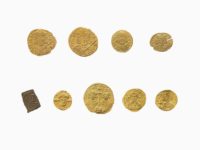
Coin, Ruler: Tiberius III, Byzantine Emperor; circa: 705-711; Minted in: Ravenna. Weight: 4.309 grammes. British Museum is closed 24, 25 and 26 December and 1 January, but is open every other day of the year. Fast facts about the British Museum: Founded: 1753, Collection size: 8 million objects, Oldest object in the collection: Stone chopping tool (nearly 2 million years old).
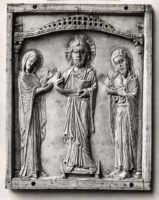
Ivory Panel, carved with standing figures, Christ with the Virgin Mary and St John, below a pierced canopy; four holes for attachment in the raised border. Period: Middle Byzantine circa: 10thc. Materials: Ivory. British Museum is closed 24, 25 and 26 December and 1 January, but is open every other day of the year. Fast facts about the British Museum: Founded: 1753, Collection size: 8 million objects, Oldest object in the collection: Stone chopping tool (nearly 2 million years old).
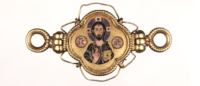
Hinged Closure with Christ and the Virgin, Period: Middle Byzantine. Date: Second half 10th to early 11th century. Materials: enamel on gold. The museum is open to the public Tuesday through Sunday, 11:30 a.m.–5:30 p.m., except for federal holidays.
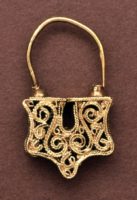
Gold Earring, Period: Middle Byzantine. circa: 12thc. Length: 1.24 inches. British Museum is closed 24, 25 and 26 December and 1 January, but is open every other day of the year. Fast facts about the British Museum: Founded: 1753, Collection size: 8 million objects, Oldest object in the collection: Stone chopping tool (nearly 2 million years old).
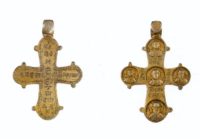
Pectoral cross with busts of Jesus Christ and saints, silver-gilt. On the reverse, the engraved inscription refers to its owner: Epiphanios. Period: Middle Byzantine; circa: 11th c. The Benaki Museum of Greek Culture is housed in one of the most beautiful neoclassical-style buildings in Athens, near the National Garden and the Hellenic Parliament.
No entries were found.